Showing posts with label God's Garden. Show all posts

Sunday, March 29, 2020

A Breath of Hope: The Story of Ezekiel

[Note: You can also watch this lesson in video form here.]

Our Alleluia class lesson for today is called “Breath of Hope.”

This is our opening prayer:

O God, when things go wrong and situations seem hopeless, 
help us to trust in your promise to be with us always. 

Be with us now as we learn more about you. Amen.


Today’s theme is Hope. 

Have you ever felt hopeless? Everyone feels hopeless sometimes. Maybe you were learning something new in school and you thought you’d never understand. Maybe there were changes happening in your family that you couldn’t control. Maybe you made a mistake and you didn’t think it could ever be fixed.

Over the last few weeks, we’ve been talking about different people in the Bible. 


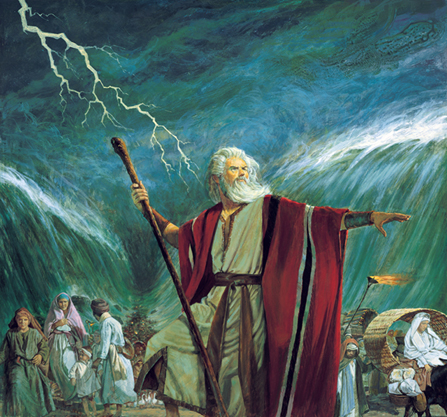
Many of them felt hopeless sometimes, too. Do you recognize the people above from our stories? There's Adam and Eve, Moses, and Abraham and Sarah.

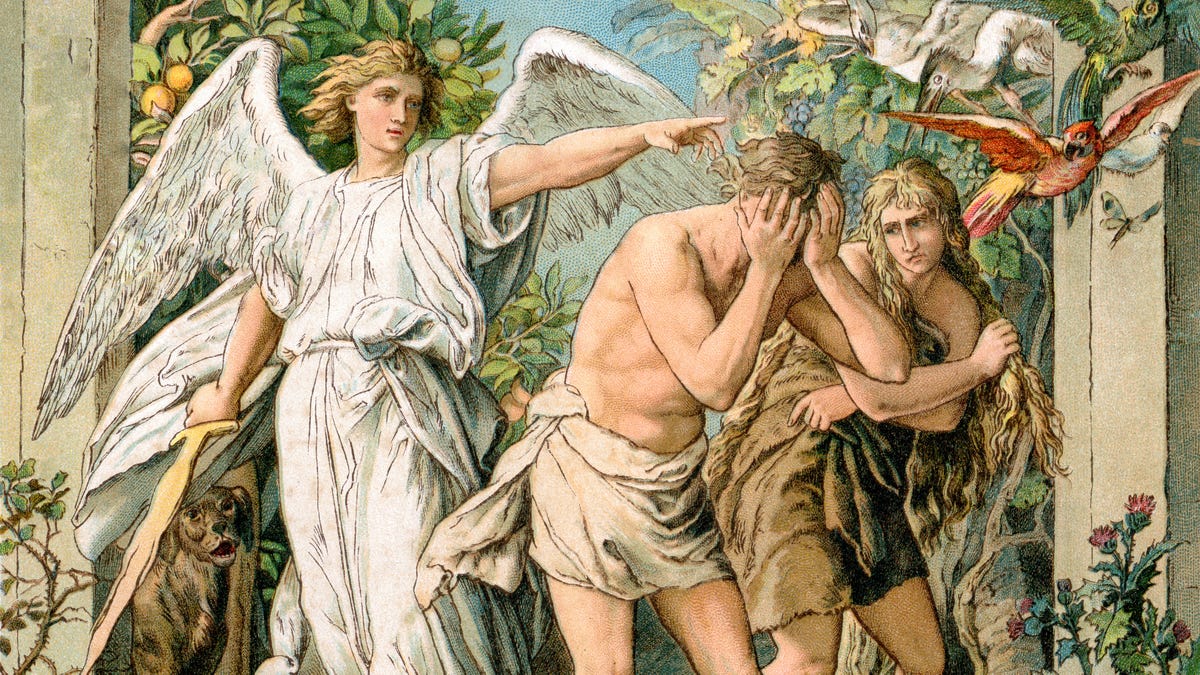
Adam and Eve disobeyed God, and he sent them away from their home in Eden. They had to work hard for food, and protect themselves from dangerous animals, and build themselves a home, things they never had to do before. Adam and Eve must have felt pretty hopeless.
Abraham and Sarah wanted children, but they weren’t able to have any. God promised them they would be the parents of a great nation, but they grew old, and still had no children. Abraham and Sarah must have felt pretty hopeless.

Moses asked Pharaoh to free the Israelites, over and over, but Pharaoh said no, over and over. When the Israelites were finally freed, they wandered in the desert, trying to find food and water, and complaining to Moses, over and over. Moses – and all of the Israelites - must have felt pretty hopeless.

But in all these stories, God cared for his people. He made animal skin clothes for Adam and Eve. Abraham and Sarah had a baby boy, Isaac. And Moses led the Israelites to the Promised Land.

Time went by, and the Israelites settled into their new land. Their second king, David, was anointed by God’s prophet, Samuel, when he was only a young shepherd boy. King David, and his son, King Solomon, were both good and wise kings. They listened to God and his prophets, and they worshipped God and thanked him for his blessings on them and their people.

But over time, the kings of Israel stopped listening to the prophets. They – and the people of Israel – stopping worshipping God. Soon wars broke out and the kingdom began to fall apart. The prophets warned the kings that disaster would come unless they turned back to God.

But still they didn’t listen. And disaster came. The city of Jerusalem was captured by enemies and many people were taken away as prisoners. 

One of those prisoners, taken to the city of Babylon, was a young man named Ezekiel. Ezekiel was a priest, and later, a prophet. His story is in the Old Testament, in a book named after him: The Book of Ezekiel! Let’s read the story of how he became a prophet (from Ezekiel chapters 1 and 2).

In the fifth year since King Jehoiachin had been taken into exile, I, Ezekiel the priest, son of Buzi, was living with the Jewish exiles by the Chebar River in Babylonia. The sky opened, and I saw a vision of God. There I heard the Lord speak to me, and I felt his power. This was the dazzling light which shows the presence of the Lord. When I saw this, I fell face downward on the ground. Then I heard a voice saying, “Mortal man, stand up. I want to talk to you.” While the voice was speaking, God's spirit entered me and raised me to my feet, and I heard the voice continue, “Mortal man, I am sending you to the people of Israel. They have rebelled and turned against me and are still rebels, just as their ancestors were. They are stubborn and do not respect me, so I am sending you to tell them what I, the Sovereign Lord, am saying to them. Whether those rebels listen to you or not, they will know that a prophet has been among them. 

Let’s think about what the story tells us about Ezekiel. He had been a priest in Israel, and was now a captive in Babylonia with other Jewish exiles – other people who, like him, had been taken away from their homeland and were now slaves. Then, God sent him a vision, and told him to speak to the people of Israel and tell them that they are stubborn and rebellious, and have turned against God. Ezekiel was to tell the people to turn back and be obedient to God once again.

Do you think the Israelite captives in Babylon felt hopeless?

Did they miss their homeland?

Did they wonder why God had abandoned them?

Were they ready to listen to God’s prophet now?

Was it too late for them to receive God’s forgiveness?

God sent Ezekiel another vision, showing what God could do, even though the people of Israel’s faith was dead. Let’s read Ezekiel’s description of what God showed him, from Ezekiel chapter 37, verses 1 through 14.

I felt the powerful presence of the Lord, and his spirit took me and set me down in a valley where the ground was covered with bones. He led me all around the valley, and I could see that there were very many bones and that they were very dry. He said to me, “Mortal man, can these bones come back to life?”

I replied, “Sovereign Lord, only you can answer that!”

He said, “Prophesy to the bones. Tell these dry bones to listen to the word of the Lord. Tell them that I, the Sovereign Lord, am saying to them: I am going to put breath into you and bring you back to life. I will give you sinews and muscles, and cover you with skin. I will put breath into you and bring you back to life. Then you will know that I am the Lord.”

So I prophesied as I had been told. While I was speaking, I heard a rattling noise, and the bones began to join together. While I watched, the bones were covered with sinews and muscles, and then with skin. But there was no breath in the bodies.

God said to me, “Mortal man, prophesy to the wind. Tell the wind that the Sovereign Lord commands it to come from every direction, to breathe into these dead bodies, and to bring them back to life.”

So I prophesied as I had been told. Breath entered the bodies, and they came to life and stood up. There were enough of them to form an army.
God said to me, “Mortal man, the people of Israel are like these bones. They say that they are dried up, without any hope and with no future. So prophesy to my people Israel and tell them that I, the Sovereign Lord, am going to open their graves. I am going to take them out and bring them back to the land of Israel. When I open the graves where my people are buried and bring them out, they will know that I am the Lord. I will put my breath in them, bring them back to life, and let them live in their own land. Then they will know that I am the Lord. I have promised that I would do this—and I will. I, the Lord, have spoken.”


What do you think the Israelites thought when Ezekiel told them about his vision?


Do you think it gave them HOPE that God still loved them and wanted to take care of them?  Do you think it gave them HOPE that God had the power to bring them out of slavery again? Do you think it gave them HOPE that God would forgive them for not worshipping him?

Right now, a lot of people are feeling hopeless about what’s happening with the corona virus. But God can still give us HOPE today! The Bible gives us HOPE that God loves us and wants to take care of our needs! The Bible gives us HOPE that God has the power to heal people who are sick! The Bible gives us HOPE that God forgives us for being afraid and struggling to trust him! The Bible gives us HOPE that God loves us, no matter what.

Let’s close with the Lord’s Prayer, then as a benediction (which means, simply, a blessing), the same Bible passage we heard at the end of the children’s sermon last week, about hope and trust.


Our Father, who art in heaven, hallowed be thy name.
Thy kingdom come, thy will be done on earth as it is in heaven.
Give us this day our daily bread, and forgive us our trespasses as we forgive those who trespass against us.
Lead us not into temptation, but deliver us from evil.
For thine is the kingdom, and the power, and the glory forever.
Amen.

And, from Psalm 91, comes this benediction and this promise: 

Whoever goes to the Lord for safety can say to Him: “You are my defender and protector, in you I trust.“ He will keep you safe from all hidden dangers and from all deadly diseases. He will cover you with His wings, and you will be safe in His care; His faithfulness will protect and defend you. God will put his angels in charge of you, to protect you wherever you go.


Bookmark and Share

Sunday, March 15, 2020

Unexpected Intimacy: The Story of Moses and the Israelites

Due to safety concerns, Payson Park Church has canceled services for this Sunday. But I'd already put together my lesson for the Alleluia Class, our Sunday School class for 2nd through 8th graders. So I figured I might as well share it for any others who are missing out on worship services today!


For the past few weeks, we've been talking about how the Bible is really a series of family stories, stories about the family of God. Just like our families tell stories about things that happened before we were born, the Bible tells us stories of our ancestors in the faith. We thank God for stories! Let's open with a prayer:

Thank you, God, for stories: 
stories of problems and mistakes, 
stories of love and forgiveness, 
stories of Your care and concern for people in trouble, 
stories that help us learn about You and Your love. 
Amen.

Problems and mistakes, and love and forgiveness, have been part of all of the stories of the people in the Bible we’ve been talking about over the past few weeks. Adam and Eve made mistakes, and God forgave and cared for them. Abraham and Sarah didn’t always trust God – Sarah laughed when God told her she would have a baby in her old age! They made mistakes, but God still blessed them and fulfilled his promise to them.

When our story ended last week, Abram and his family had traveled from Ur, to Haran, to Canaan, and then to Egypt.

Eventually they came back to Canaan, and when Abram was 99 years old, God again promised that he would have many descendants, and changed his name from Abram, which means “Father is Exalted,” to Abraham, which means “Father of a Multitude.” Sarai was 90 years old, and God changed her name from Sarai, which means “contentious” (a word that means likely to argue, or disagreeable), to Sarah, which means “princess.” God did fulfill his promise to them, and Sarah gave birth to a son, Isaac, and through him Abraham and Sarah’s descendants formed the nation of Israel.

Let’s jump ahead to our next Bible character, Moses. By the time of Moses, the Israelites – the descendants of Abraham and Sarah – were captives in Egypt. God heard their prayers and sent a leader to help them. Let’s look at some of the stories from Moses’ life. 

When Moses was just a newborn baby, Pharaoh tried to kill all the Hebrew babies, but Moses’ mother and sister put him in a basket where the Pharaoh’s daughter would find him. She adopted him and raised him in Pharaoh’s palace, as her own son. When he grew up, Moses saw a slave driver punishing his slaves cruelly, and they got into a fight and Moses killed the slave driver. Because of that, he had to run away from Egypt to a country called Midian. 

Another famous story happened in Midian. God appeared to Moses in the form of a bush that was on fire but didn’t burn up. God spoke to Moses from the fire and told him to go back to Egypt and tell Pharaoh to free the Israelites. Which leads to another story: Moses and Pharaoh.

What did Pharaoh do when Moses told him to let the Israelites go free? He refused! So God sent a series of plagues on Pharaoh's people, the Egyptians. Each time Pharaoh relented, but as soon as God stopped the plagues, Pharaoh changed his mind. Finally, God sent the angel of death to kill the firstborn of all Egypt, people and animals alike. God told the Israelites to slaughter a lamb and put blood over their doors, so the angel would pass over their homes safely. Finally, Pharaoh told the Israelites to get out!

But even then, as soon as the Israelites left, Pharaoh changed his mind and chased after them with his army. The army trapped the Israelites against the bank of the Red Sea, but God told Moses to strike the water with his staff, and the waters parted, making a dry path on the bottom of the sea so they could cross in safety.

As soon as they crossed over and the army started to follow, the water closed in and drowned the whole Egyptian army. God's people were again safe.

So now the Israelites were free, but they spent the next 40 years wandering in the desert. How do you think they felt? Was it better than being slaves in Egypt? What difficulties do you think they had being in the desert for so long? Let’s see what the Bible says about it.

The story of the Israelites wandering in the desert is in the book of Exodus, chapters 15 and 16. A lot of Bibles add headings to certain stories, almost like a chapter title. The titles in these sections in the Good News translation, the Bibles we use in our God's Garden classroom, are: The Song of Moses, the Song of Miriam, Bitter Water, and The Manna and the Quail. What hints do each of these headings give us about the story? What kind of song do you thing Moses and Miriam sang? What is "bitter water"? What are manna and quail and why might they be important to this story? Let's look at each story, one by one.

Moses and Miriam both sang their thanks to the Lord for saving them from slavery and from the Egyptian army, and the Israelites sang along with them. They encouraged the people to publicly express their thankfulness to God for His faithfulness and care for them. Miriam especially encouraged the women to sing and celebrate their freedom and victory in God.

After the people crossed the Red Sea, they began to travel away from the sea, into the desert. Water became scarce. They needed water to survive, but they had walked for three days without finding any. When they finally found some, the water was bitter and unsafe to drink. But Moses prayed to God, and God told him to throw a piece of wood into the water, and it became sweet and safe to drink.

In addition to water, the Israelites needed to find food. As they grew more and more hungry, they began to complain to Moses and his brother Aaron, who was helping to lead them. "Why didn't God just kill us in Egypt, if He was going to let us die of starvation in the desert anyway?", they complained. They lost their faith in God because of their hunger. God told Moses that He would  "rain food down from the sky" for them. God told Moses to tell the people that He would send them meat to eat at the end of the day, and bread in the morning, so they would know it was God providing for their needs.

That evening, a large flock of quail, a type of bird like a pigeon, flew into camp, and the people were able to catch them easily. And the next morning when they got up, there was dew all over the camp, and when it dried, there were delicate white flakes left behind. The Israelites asked each other, "What is it?" (which sounds like "manna" in Hebrew), and Moses told them it was the food that God had promised them. And God continued to send them manna for the rest of the time they were wandering in the desert - for all 40 years!

Let’s read from the next chapter, Exodus 17, to see how the people behaved after this.

The whole Israelite community left the desert, moving from one place to another at the command of the Lord. They camped at Rephidim, but there was no water there to drink. They complained to Moses and said, “Give us water to drink.” Moses answered, “Why are you complaining? Why are you putting the Lord to the test?” But the people were very thirsty and continued to complain to Moses. They said, “Why did you bring us out of Egypt? To kill us and our children and our livestock with thirst?” Moses prayed earnestly to the Lord and said, “What can I do with these people? They are almost ready to stone me.” The Lord said to Moses, “Take some of the leaders of Israel with you, and go on ahead of the people. Take along the stick with which you struck the Nile. I will stand before you on a rock at Mount Sinai. Strike the rock, and water will come out of it for the people to drink.” Moses did so in the presence of the leaders of Israel. The place was named Massah and Meribah [which mean “testing” and “complaining”], because the Israelites complained and put the Lord to the test when they asked, “Is the Lord with us or not?”

Why did the Israelites grumble? Do you think they had good reason to be upset? Try to imagine: they were slaves, then they were free, then they were being chased by an army, then God miraculously saved them, they wandered in the desert, God provided them water and food, but now they were without water AGAIN. Whom did they blame for their troubles? What were they really afraid of? How did Moses respond? What did God do? Did God get angry with the people for complaining?

Do you think God listens when we grumble and complain about things? Do we have to be always good and making good choices for God to listen to our prayers? Of course not! God listens to us even when we make mistakes and bad choices, even when we disobey Him. What kinds of things do you grumble about? Homework, chores, bullies, not getting what you want? Do you ever talk to God about those problems? We can talk to God about all our problems, large and small. He always listens.

Let’s think about how Moses talked to God. He talked to Him like a friend, asking for advice. “What can I do about these people?”, he asked God. Do you think we can talk to God the way Moses did, like a friend who gives good advice? Does God speak to us face-to-face like Moses? Not usually, but He does speak to us through the Bible, through worship and discussion, through our consciences, even through advice from other Christians.

Not long after this story, God gave Moses the Ten Commandments on Mt. Sinai. God’s laws are a way that God speaks to us! God's laws teach us how to behave, and can help guide our decisions and let us know if we're doing the right thing. And not just the Ten Commandments, but everything we learn from scripture about how God wants us to live and love each other.

Let’s end our lesson with prayer.

Thank you, God, for your love and care. 
You cared for Adam and Eve after they disobeyed you. 
You saved Noah and his family from the flood. 
You saved Moses as a baby and spoke to him as a friend. 
You brought the Israelites out of slavery and supplied their needs as they wandered in the desert. 
You help us in our times of difficulty. 
Amen.


Bookmark and Share