Showing posts with label Tony awards. Show all posts

Tuesday, June 11, 2019

Red Carpet Review: The 2019 Tony Awards (part 1)

The 2019 Tony Awards were this weekend, and of course, I posted a lot of commentary on the fashions during the red carpet pre-show as well as during the ceremony itself. But I'd love to comment on a few dresses I didn't get to talk about, as well as go into a bit more detail on a few that I did. And in fact, I'm going to do this blog in two parts, because there were so many fabulous (and a few not-so-fabulous) variations on the basic tuxedo that the men deserve an entry all their own.

In fact, the men deserve to go first, since they are so often neglected in my fashion commentary. While there's never anything wrong with wearing a standard black tuxedo to a red carpet event (provided, of course, that it is well-tailored and well-pressed), I love it when the stars let their personalities shine through with variations in color, cut, accessories, textures, and any number of other ways to individualize a tuxedo without losing its innate formality and flattering silhouette.

First, we have the undisputed master of all things fashion: Bob Mackie. Mackie won Best Costume Design for The Cher Show in this immaculately tailored classic black tux with a satin shawl collar, hand-tied bow tie, and a tiny slip of white pocket square. The pants are a slim fit without being overly skinny, and the jacket opening dips just a tad lower than standard, giving it a contemporary feel. Nothing short of sheer perfection, naturally.

Charlie Carver's tuxedo leaned more toward the skinny pants that are so popular of late, but like Mackie's tux, they're not so extreme as to leave the realm of "classic." Carver's tux is just shy of true black, more a dark steel gray with just a hint of a sheen, with a satin shawl collar and a large black bow tie. Classic and elegant, with just a hint of personal flair.

Daniel Fish paired his black tuxedo, with its skinny shawl collar and slightly longer than standard jacket, with a black collared shirt and ribbon-style tie, finished with a black pocket square. The all-black ensemble was very dramatic and striking, especially paired with his cool shades and salt-and-pepper beard. Just perfect for a theatre event.

Darren Criss got rid of lapels altogether in his slim-cut black tux, pairing it with a plain white dress shirt and a white long tie. It was a bit casual and bland for me, especially since the tie blended into his shirt and vanished, but I will admit that the long narrow slash of visible white made him look especially tall and slender, which is never a bad thing.

David Miller (left) wore a black velvet tux jacket with satin collar and cuffs to add some old-school Hollywood glamour. Ryan Murphy (right) swapped out the jacket of a standard black tux with a shiny powder blue metallic jacket for an eye-catching yet still classic (and vaguely retro) look.

Erich Bergen added some pizzazz to his standard black tux with red piping outlining the jacket, including the collar and cuffs. It was just subtle enough to not look cheesy while still adding the tiniest pop of color. Nice.

Clint Ramos was one of the few real fails for me for men on the red carpet. The black satin fabric was a good choice, but the shapeless, baggy cut of both the shirt and the culottes was unflattering. It needed some kind of structure somewhere, whether squared shoulders or a nipped-in waist or even more of a jodhpur cut to the pants. But it just looked messy and unfinished to me, especially when worn with white-soled sneakers - although he does earn major bonus points for accessorizing with his grandmother's jewelry, as he explained during a red carpet interview.

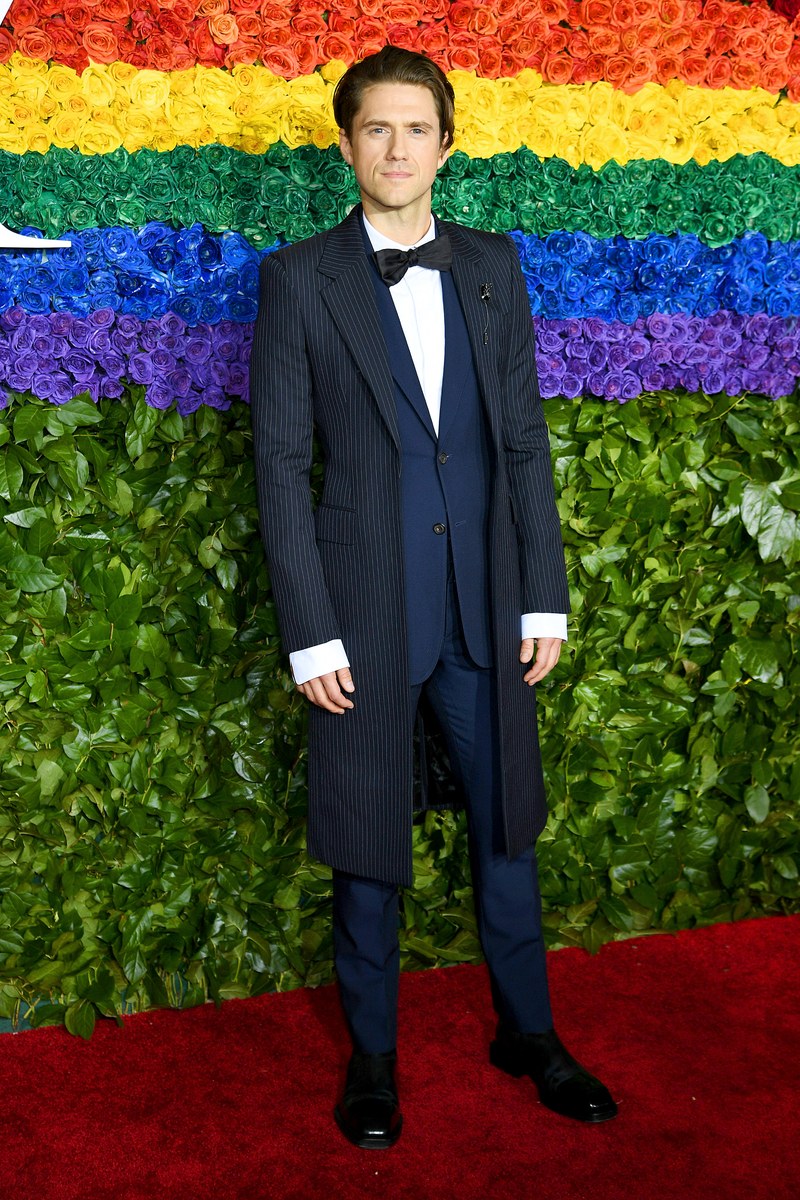
I absolutely adored Aaron Tveit's look - a skinny-cut but still classic midnight blue tuxedo, but topped with a long black pinstriped outer coat that fell to the knee. I even loved the extra-long white cuffs on the shirt. It was very dramatic and contemporary, yet the lines and silhouette were still completely classic. Sheer elegance with a modern twist. 

Gideon Glick modernized his midnight blue tux with textured fabric, the wisps of eyelash breaking up the sheen of this gorgeous silk tux. He opted for extremely slim-fit pants, which worked beautifully on his slender build, and - thankfully - avoided the modern trend of too-short pants with bare ankle peeping out, which to me breaks the line of the leg and looks too informal for the red carpet. Excellent choices all around here.

One of my favorite variations on the black tuxedo was this amazing ensemble worn by Andre de Shields. His long black and silver coat with wide black satin lapels flared just slightly, and the sparkle of his gold lame bow tie and gold lapel pin were echoed in his fabulous golden winged sneakers, a charming nod to his character of Hermes, for which he was nominated for Best Featured Actor in a Musical (spoiler alert: he won). Not just anyone could have pulled off this look, but a legend like Andre de Shields can make anything work.

Jeremy Pope wins the tailoring award for this impeccably structured all-black ensemble. There are so many amazing details, from the wrap-front satin pants, to the high-pointed jacket lapels that reach above the shoulder line, to the open angles at the bottom of the sleeves, to the black lace, high-collared shirt with offset bow at the neck. And the impeccably polished, just slightly-heeled boots were the perfect finishing touch. I loved everything about this look. I would wear this look (just probably not as well as Pope).

Cutest couple of the evening had to be Matt Bomer and his adorable son Henry, who both went for slight variations on the classic tux. Bomer Senior paired standard black pants with a midnight blue tux jacket and matching shirt and bow tie, while Bomer Junior paired his black tux with a white shirt and black bow tie, but added his own stamp with white-soled black tennies and a perfectly-folded three-point white pocket square. Everything about these two was simply delightful.

White dinner jackets are another lovely old-school red carpet look, and Denny Directo wore his well, complete with an oversized black bow tie. A tiny red pocket square and just a peek of bare ankle above his loafers gave a contemporary flair without spoiling the Bogart vibe.

Ephraim Sykes took the white jacket one step further (perhaps one step too far?) in this all-white ensemble, which included a shiny white satin jacket and matching bow tie, white dress shirt, white bucks, and white pants which seemed to consist of satin shorts with organza pantlegs. I will give points for the beautiful French seams and deep hem of the organza section, which gave it the finished, polished look that's often missing in see-through garments. But the overall look just felt unbalanced and mismatched to me. Not terrible, just not terrific either.

Michael James Scott also went with a nearly all-white look, which was much more successful for me. I love that he added a vest under his jacket, and especially that it's a morning suit vest, which is cut straight across at the waist instead of having points, like most men's formal vests. I find that a very flattering cut on a stockier man like Scott. But he truly won me over with his midnight blue, gold-studded slippers, an obvious nod to his role as the Genie in Aladdin, as well as simply being a fun, whimsical touch.

Another look that won me over with a great vest and shoes was Michael Urie. He paired deeply cuffed, wide-legged white pants with a deep blue textured jacket with wide satin lapels, over a white dress shirt with pale blue organza ruffled cuffs and and overlapping blue vest studded with white flowers. The flower pattern was carried through in a diamond lapel pin and double diamond buttons on the sleeves, which in turn were echoed by diamond bows on the navy loafers. So many great touches, and they all worked well together without being too much.

Sometimes, unfortunately, too many interesting details can be too much, and that was the case for me with Reeve Carney. There was just too much going on that didn't really tie together: an overlarge top hat with a kettle brim, an overlong sleeveless fitted jacket/vest, baggy metallic gold pants, and who knows what was going on with the collar and tie. Any one of those details could have been fun (I actually really loved the vest), but as it was, the ensemble looked costume-y and disconnected.

Colored tuxedos were quite popular on the red carpet. Benjamin Tyler Cook opted for a vivid lilac slim suit with narrow notched lapels, paired with a white dress shirt and long, narrow black tie. It would have worked for me except that it was a little too tight, as evidenced by the tugging jacket button, the wrinkling under the armpits, and the clear outline of a folded paper in his right pants pocket.

Damon Daunno also opted for a colored tuxedo, in his case maroon with black lapels. I like the look other than the slightly-short pants revealing bare ankles. I can live with loafers paired with a tuxedo, but not when worn without socks. Certainly not at a red carpet event.

Bryan Cranston went a little retro in this handsome tweed jacket with curved midnight blue satin lapels and matching midnight blue pants. Bonus points for color-coordinating outfits with his lovely wife, and for his perfectly polished patent leather shoes.

Jack Noseworthy (left) and Sergio Trujillo (right) were another nicely coordinated duo. With similar silhouettes and colors to tie them together, they each made the style their own with slight variations in texture and lapel shape.

Brandon Uranowitz went even further than tweed in terms of patterns with this modern, almost futuristic, metallic-print suit - it's strayed a little too far to call it a tuxedo, I think. It reminds me of a cross between a Mao jacket and a dentist's coat, with its offset closure and slightly raised collar. Somehow, I don't mind the short pants and bare ankles with this look; it suits it. Not a look I'd have chosen, but it's dramatic, it's memorable, and I like it.

Hamish Bowles was one of several men sporting floral print tuxedos at the Tonys. Although I'm not a fan of the style in general, somehow his total commitment to the look, including not only a bubblegum pink print, but matching tennis shoes, made it work for me.

James Corden walked the red carpet in a floral tux as well. Corden opted for a subtle gray-on-brown print with a nice sheen that was one of my favorite looks of his over the course of the night (he changed tuxedos at almost every commercial break, I think).

I was not a fan of Corden's look for the opening number, with its ghastly clashing red-and-neon-pink jacket. The cut was fine, the color combination was physically painful. I was very glad that he quickly changed to another look.

A pair who chose not to coordinate their looks was Jesse Tyler Ferguson (left) and Justin Mikita (right). Ferguson wore an olive silk tuxedo that complemented his red hair and fair skin beautifully, and which was tailored beautifully. I was less of a fan of Mikita's novelty print tuxedo, which was made of cheap-looking fabric that was cut more like yoga pants than tuxedo pants. It was cute as a novelty look, but it wasn't appropriate for a red carpet event, or paired with Ferguson's much more elegant look.

James Harkness, however, was very easy on the eyes in this elegant, almost smoking-jacket inspired tuxedo. The shiny silver-and-black fabric was just subtle enough to be eye-catching but not ostentatious or overdone. And the large, old-school bow tie was the perfect finishing touch. I like that that style of tie seems to be coming back into vogue.

Zachary Quinto pulled off a similar contemporary-twist-on-old-school-glamour with this double-breasted midnight blue velvet jacket and black pants. The jacket was cut a hair shorter than I would have liked, but the overall silhouette was still good, and the color was very striking with Quinto's dark hair and eyes.

I'm a sucker for a cape, I admit this. But Jordan Roth pulled off this vivid scarlet, spangled, caped ensemble with exceptional panache. The the matte suit underneath with its flared pants and ruffled front, the pointy-toed boots, the patent clutch; every detail of this look worked together to bring it right up to the line of being obnoxious without crossing it, setting it firmly in fabulous territory. I loved it.

Naturally, the look that everyone was talking about, however, was Billy Porter's. And although there were parts of his look that I really loved, there were parts I was less than fond of. For example, the pink-and-red color combination just didn't work for me, at least not the oceans of frothy pink tulle at the sides and hem. I didn't really like the way the tulle was frothed just at the sides of the legs, either - it looked like a lopsided bell bottoms from ABBA. But what I did like - love, even - was the structure of the jacket/vest. I loved the way the collar stood up at the nape of the neck, and I loved the way the front of the jacket was nipped back below the buttons. I loved the fitted silhouette. I even loved the pink buttons and pink piping - somehow, the pink and red combination worked for me here. 

I'm not sure if Porter had to remove the overskirt to fit into his seat during the ceremony, but when he came up to sing karaoke during the commercial break, he was wearing just these cropped pants, and I LOVED this look. The shoes are great, the length and cut of the pants are great, the overall look is balanced. So I'm still giving him the nod for a winning look.

 Tune in tomorrow for my critique of the ladies' fashions!


Bookmark and Share

Tuesday, May 2, 2017

Everything You Need to Know About This Year's Tony Nominees

If you're not a theatre fan, you probably don't care much about the Tony nominations (you probably also don't know why I spelled it "theatre" instead of "theater", but that's another blog for another day). But even non-theatre fans might be interested in some background about some of the shows that received Tony nominations this year. The shows with multiple nominations include the following:


  • A Doll's House, Part 2: Best Play, Best Leading Actor (Chris Cooper), Best Leading Actress (Laurie Metcalf), Best Featured Actress (Jayne Houdyshell and Condola Rashad), Best Costume Design (David Zinn), Best Lighting Design (Jennifer Tipton), Best Direction (Sam Gold)
  • Oslo: Best Play, Best Leading Actor (Jefferson Mays), Best Leading Actress (Jennifer Ehle), Best Featured Actor (Michael Aronov), Best Scenic Design (Michael Yeargan), Best Lighting Design (Donald Holder), Best Direction (Bartlett Sher)
  • Come From Away: Best Musical, Best Book (Irene Sankoff and David Hein), Best Original Score (Irene Sankoff and David Hein), Best Featured Actress (Jenn Colella), Best Lighting Design (Howell Binkley), Best Direction (Christopher Ashley), Best Choreography (Kelly Devine)
  • Dear Evan Hansen: Best Musical, Best Book (Steven Levenson), Original Score (Benj Pasek and Justin Paul), Best Leading Actor (Ben Platt), Best Featured Actor (Mike Faist), Best Featured Actress (Rachel Bay Jones), Best Lighting Design (Japhy Weideman), Best Direction (Michael Greif), Best Orchestrations (Alex Lacamoire)
  • Groundhog Day the Musical: Best Musical, Best Book (Danny Rubin), Best Original Score (Tim Minchin), Best Leading Actor (Andy Karl), Best Scenic Design (Rob Howell), Best Direction (Matthew Warchus), Best Choreography (Peter Darling and Ellen Kane)
  • Natasha, Pierre & the Great Comet of 1812: Best Musical, Best Book (Dave Malloy), Best Original Score (Dave Malloy), Best Leading Actor (Josh Groban), Best Leading Actress (Denee Benton), Best Featured Actor (Lucas Steele), Best Scenic Design (Mimi Lien), Best Costume Design (Paloma Young), Best Lighting Design (Bradley King), Best Direction (Rachel Chavkin), Best Choreography (Sam Pinkleton), Best Orchestrations (Dave Malloy)
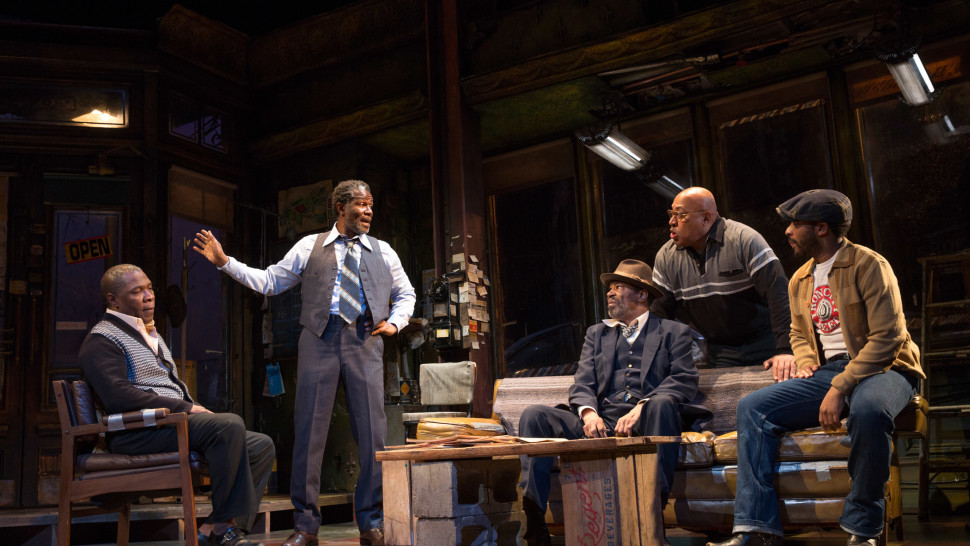
  • August Wilson's Jitney: Best Revival of a Play, Best Featured Actor (John Douglas Thompson), Best Scenic Design (David Gallo), Best Costume Design (Toni-Leslie James), Best Lighting Design (Jane Cox), Best Direction (Ruben Santiago-Hudson)
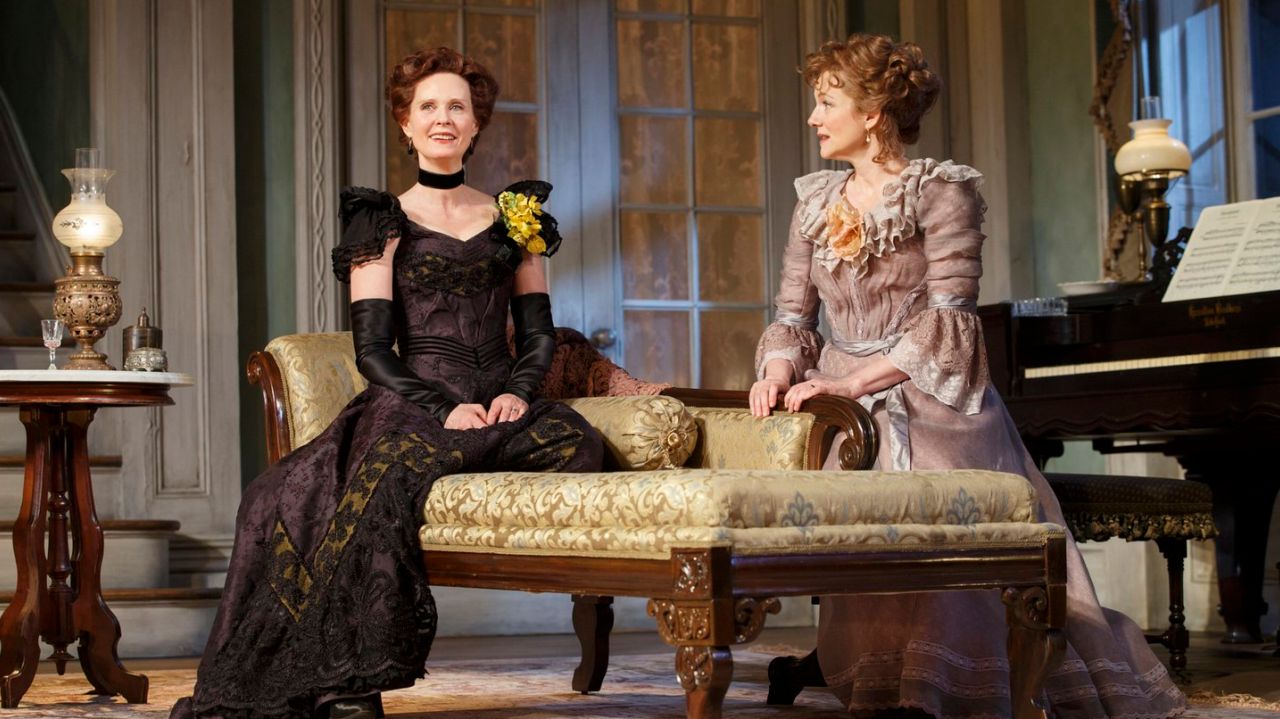
  • Lillian Hellman's The Little Foxes: Best Revival of a Play, Best Leading Actress (Laura Linney), Best Featured Actor (Richard Thomas), Best Featured Actress (Cynthia Nixon), Best Costume Design (Jane Greenwood), Best Direction (Daniel Sullivan)
  • Falsettos: Best Revival of a Musical, Best Leading Actor (Christian Borle), Best Featured Actor (Andrew Rannells and Brandon Uranowitz), Best Featured Actress (Stephanie J. Block)
  • Hello, Dolly!: Best Revival of a Musical, Best Leading Actor (David Hyde Pierce), Best Leading Actress (Bette Midler), Best Featured Actor (Gavin Creel), Best Featured Actress (Kate Baldwin), Best Scenic Design (Santo Loquasto), Best Costume Design (Santo Loquasto), Best Lighting Design (Natasha Katz), Best Direction (Jerry Zaks), Best Orchestrations (Larry Hochman)
Other shows receiving nominations include: 
  • Plays/Play Revivals: Indecent, Sweat, Present Laughter, Six Degrees of Separation, Heisenberg, The Present, The Glass Menagerie, Arthur Miller's The Price, The Front Page, The Play That Goes Wrong
  • Musicals/Musical Revivals: Miss Saigon, War Paint, Anastasia, Bandstand, Holiday Inn the New Irving Berlin Musical


Let's take a quick look at the big nomination-getters.

A Doll's House, Part 2

The Background: Many of us may be familiar with Henrik Ibsen's play, A Doll's House, from having to read it in high school or college. You may even remember that the play ends with downtrodden wife, Nora, literally walking out the door and leaving behind her husband, Torvald, and their three children. Playwright Lucas Hnath wrote this play to answer the question, "But what happened afterwards?" Did Nora make her own way in life? Did Torvald manage to raise the children alone? Did either of them regret what happened? What did the children think about their mother leaving, once they were grown? It takes a daring playwright to write a sequel to a classic literary work, but judging by the long list of Tony nominations that this production received, his risk paid off. 

The Plot: The play begins, interestingly, with Nora knocking on the very same door we saw her walk through at the end of the original. Fifteen years have passed, and Nora has become a successful writer, but she has recently discovered that Torvald never divorced her. She has returned to request that divorce, since under Norwegian law at the time, a married woman was prohibited from conducting business without her husband's consent, making her writing illegal. We see the reaction of her nanny, her daughter, and her husband to her return.  

Interesting Factoids: Leading actor and actress, Chris Cooper and Laurie Metcalf, are familiar names even to non-theater-goers as well as hugely talented stage actors. Yes, that's the same Chris Cooper from the films American Beauty, The Bourne IdentityAdaptation (for which he received an Oscar), and Sea Biscuit. And yes, that's the same Laurie Metcalf from the Roseanne TV show and the voice of Andy's mom in The Toy Story films. Both have previous Broadway credits, Cooper in Of the Fields, Lately, and Metcalf in 5 other productions, 3 of which earned her previous Tony nominations (NovemberThe Other Place, and Misery). 

Oslo

The Background: This play premiered at Lincoln Center and played off-Broadway for nearly a year before transferring the entire cast to Broadway.

The Plot: The true story of a group of diplomats attempting to broker peace between Israel and Palestine. But, as one reviewer commented, this is not a play about politics, nor even about leaders. "Rather, it is about their deputies, and oftentimes about their deputies’ deputies." [Tal Kra-Oz, tabletmag.com]

Interesting Factoids: This production involves a number of previous Tony nominees and winners. Jefferson Mays won a Tony for I Am My Own Wife and was nominated for A Gentleman's Guide to Love and Murder. Jennifer Ehle has two Tony awards, for The Real Thing and The Coast of Utopia. Set Designer Michael Yeargan holds previous Tonys for The Light in the Piazza and South Pacific as well as a nomination for The King and I. Lighting Designer Donald Holder has Tonys for The Lion King and South Pacific, plus a whopping NINE additional nominations. Director Bartlett Sher has five Tony nominations plus a win for South Pacific

Come From Away

The Background: The airport in the town of Gander, Newfoundland, was a popular refueling stop until the jet age made most of those stops unnecessary, and it began to be used only for emergency landings. On September 11, 2001, 38 planes were forced to make emergency landings there due to the bombing of the Twin Towers, and the town somehow managed to accommodate all 6,700 passengers on those planes until transportation could be arranged to send them home. Producer Michael Rubinoff pitched the idea of making the story into a musical to several writers before finding takers in husband-and-wife writing team Irene Sankoff and David Hein. Sankoff and Hein flew to Gander for the 10th anniversary of the attacks, and spent a month interviewing people and conducting research for the script. 

The Plot: The play takes place over the course of five days, as the town residents open their halls, homes, and hearts to the stranded passengers. It was described by one reviewer as a "portrait of heroic hospitality under extraordinary pressure."

Interesting Factoids: Sankoff and Hein previously wrote a show called My Mother's Lesbian Jewish Wiccan Wedding (based on the real story of Hein's mother). Prior to its Broadway debut, Come From Away was performed in a hockey rink in the town of Gander where the actual events occurred, for the residents who inspired the production. 

Dear Evan Hansen

The Background: This original musical is based on an incident that happened during writer and composer Benj Pasek's high school career. 

The Plot: A shy, socially anxious teen writes himself a pep-talk letter, as advised by his therapist, but it gets stolen by another loner who later kills himself. The dead boy's family finds the letter and seeks Evan out, assuming the boys were friends, and looking for an explanation of why he killed himself. Evan gets caught up in a web of well-intentioned lies, enjoying the longed-for attention he is receiving, but being eaten by guilt. The themes of teen suicide and loneliness sound like a bleak show, but the result is actually upbeat, focusing on Evan's desire to do good and figure out what the right thing is to do. 

Interesting Factoids: Composers Benj Pasek and Justin Paul are the same team who scored the Oscar-winning film La La Land. As a publicity stunt, the song "Requiem" was made available for streaming for a 24-hour period a week prior to the release of the full original cast recording. The cast album debuted at #8 on the Billboard 200 chart. 

Groundhog Day the Musical

The Background: Based on the 1993 Bill Murray film, Groundhog Day. The book of the musical was written by Danny Rubin, who co-wrote the original screenplay with Harold Ramis. 

The Plot: A TV weatherman forced to cover the annual Groundhog Day celebration in Punxsatawney gets stuck reliving the same day over and over again. 

Interesting Factoids: Stephen Sondheim considered the film as source material for a musical, but decided that "to make a musical of Groundhog Day would be to gild the lily. It cannot be improved." Composer Tim Minchin also received a Tony nomination for his score for Matilda the Musical

Natasha, Pierre & the Great Comet of 1812

The Background: This musical was adapted from a section of the Leo Tolstoy novel, "War and Peace." The Broadway production seems to be a mix of period and contemporary looks and styles, both visually and musically. It is repeatedly described as "immersive," which seems to sum up much of the experience: the audience is surrounded by the coiled, multi-level stage and given vodka and pierogies during many performances. It's about soaring music and striking visuals. 

The Plot: I'll be honest: I've read at least half a dozen synopses of this show and I STILL can't figure out exactly what it's about. I think it's a bunch of Russians having affairs with inappropriate people. Some of them seem to feel guilty about it. Considering that the character descriptions given in the script are statements like, "Natasha is young," "Anatole is hot," and "Dolokhov is fierce, but not too important", I don't think the plot is really the point here. (See "vodka and pierogies" comment, above. Also, Josh Groban. Enough said.) 

Interesting Factoids: Composer and librettist Dave Malloy played Pierre in the original off-Broadway production. Groban plays the accordion onstage during the production. 

August Wilson's Jitney

The Background: Jitney was the eighth's play in Wilson's "Pittsburgh Cycle." Written and set in the mid-1970s, it was first produced in Pittsburgh (where it is set), with subsequent productions across the country through the late 1990s. 

The Plot: The play follows the lives of a group of men working as jitney drivers, unlicensed cabbies in a Pittsburgh district where regular, licensed taxis refuse to drive. Troubles arise when the city makes plans to tear down their building to build housing projects and the boss's son comes home after a long prison sentence. Ben Brantley sums up the message of the play thusly: "That many of the societal problems faced by its characters remain almost exactly the same is shaming and sobering. Yet their collective voice is joyfully intoxicating. Jitney is a lament that has the affirmative ring of celebration."

Interesting Factoids: The Broadway revival began previews in December 2016, opened in January 2017, and closed in March 2017. It is the only one of the 10 "Pittsburgh Cycle" plays not to run on Broadway following its original off-Broadway run. 

Lillian Hellman's The Little Foxes

The Background: Hellman wrote the original play in 1939, the title of which is taken from Song of Songs 2:15: "Take us the foxes, the little foxes, that spoil the vines: for our vines have tender grapes." Hellman is said to have based the Hubbard family on her maternal grandparents and their family. 

The Plot: A greedy southern belle, Regina, and her two brothers scheme to manipulate her husband (who controls her fortune) into investing with a big-city developer. Regina is clearly a better businesswoman than her brothers or her husband, but she is frustrated at being forced into the traditional role of a Southern woman - who is not allowed to either handle or inherit money. Her shrewdness becomes bitterness and even rage.

Interesting Factoids: Dorothy Parker suggested the title of the play to Hellman. Tallulah Bankhead played Regina in the original Broadway production. Hellman rewrote the stage version into a 1941 film script, which starred Bette Davis and many members of the Broadway cast. In 1956, the script was adapted into a television version starring Greer Garson. In the current revival, Laura Linney and Cynthia Nixon alternate the roles of Regina and sister-in-law Birdie.

Falsettos

The Background: The original production opened on Broadway in 1992, and was the combination of 2 of 3 one-act off-Broadway shows, The March of the Falsettos and Falsettoland.

The Plot: The show centers around Marvin, who has left his son Jason and his wife Trina to move in with his lover, Whizzer. Psychiatrist Mendel counsels Trina (finding himself attracted to her), Jason (who is uncomfortable with the thought that his father is gay), and Marvin (who is unsure of his love for Whizzer). Act 1 ends with Trina planning to marry Mendel, Marvin and Whizzer's relationship down the drain, Marvin and Trina's relationship in tatters, and Jason discovering girls - and that his father will be there for him, no matter what. In Act 2, Jason's upcoming Bar Mitzvah is threatening the tentative truce between Marvin and Trina, Jason is struggling with his invitation list, and Whizzer unexpectedly shows up, stirring up old feelings. Whizzer and Marvin rekindle their relationship, but it becomes clear that Whizzer is desperately ill and near death. Jason suggests they hold the Bar Mitzvah in Whizzer's hospital room and begs God for a miracle to save Whizzer's life. The play ends as Marvin and Whizzer's spirit reflect on what their lives would have been had they never been friends.

Interesting Factoids: The original production received 7 Tony nominations and won Best Book and Best Score. The revival was filmed by PBS on January 3 & 4, 2017, and is expected to be aired at a future date.

Hello, Dolly!

The Background: The original 1964 musical was based on Thornton Wilder's 1955 play "The Matchmaker" (which was Wilder's revision of his own 1938 play "The Merchant of Yonkers"). It was made into a film 5 years later, and was revived on Broadway in 1975, 1978, and 1995, in addition to the current revival.

The Plot: Widowed matchmaker Dolly Gallagher Levi takes on a rich but cantankerous client and decides that she's his perfect match.

Interesting Factoids: The working title of the original musical during out-of-town tryouts was "Call On Dolly", but when producer David Merrick heard Louis Armstrong's recording of "Hello, Dolly," he immediately changed the title. Clips from the 1969 movie were used in the film Wall-E. The song "Penny in My Pocket," originally sung by Vandergelder at the beginning of Act 2 but cut from the original Broadway production, is included in this revival.


Now go to your calendar and make a note to watch the Tony Awards on Sunday, June 11. Red carpet, here we come!


Bookmark and Share