Last fall I posted a blog about the most common birds that I had been seeing at my feeder. But after a full year of living at this house, I've discovered a few more visitors that I thought it would be fun to add to the list. My first list included the titmouse, chickadee, goldfinch, cardinal, white-breasted nuthatch, hairy and downy woodpeckers, flicker, pileated woodpecker, mourning dove, blue jay, ruby-throated hummingbird, Carolina wren, Baltimore oriole, bluebird, mockingbird, catbird, phoebe, and red-tailed hawk. This one will cover the robin, junco, red-breasted nuthatch, cowbird, chipping sparrow, red-bellied woodpecker, song sparrow, Cooper's hawk, turkey vulture, and house finch.
American Robin
Robins are harbingers of spring in my New England yard, although we sometimes have a few that hang around for most of the winter. This year for most of the winter I had flocks stopping to feast on the berries of my holly bushes on their way south. Robins have a distinctive bright red chest. They prefer worms and berries, so are often seen hopping along the ground. They often fly close to the ground as well. Their most distinctive calls are a loud repeated scold and a happy "cheer up! cheerily!" sounding call. They often build nests near houses, including in bushes and even in wreaths on doors. Robins are quite territorial and will occasionally "fight" with the rearview mirrors on cars, thinking it's another bird.
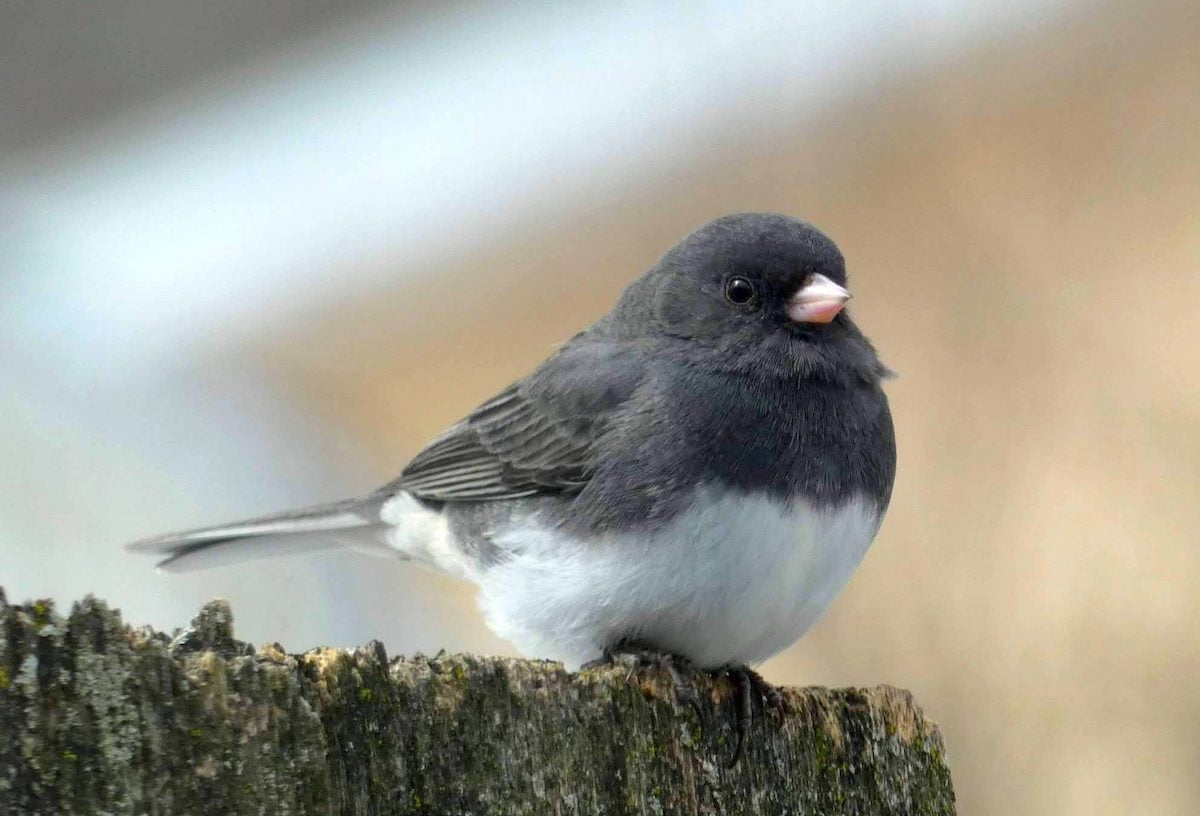
Dark-Eyed Junco
Although I tend to think of juncos as winter birds, they are around all year. Although similar in size to titmice and finches, they're easy to identify based on their white bellies which don't extend up to their chests and contrast nicely with their dark gray bodies. They also have yellow beaks. Juncos will come to a hanging feeder but more often forage on the ground. They don't make a lot of noise, but will occasionally let out a long chirring call or a repeated "chip chip" that reminds me of pinging a high tension wire.
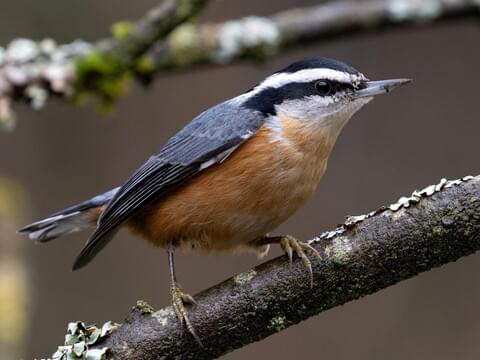
Red-breasted Nuthatch
I had never seen these fascinating little birds until living where I do now! They share a streamlined body shape with their larger cousins, the white-breasted nuthatches, and they also occasionally hang upside down on trees or feeders like them. They have a rusty-red belly and chest and a well-defined black-and-white eye stripe, and are about the size of a chickadee. They are somewhat aggressive with each other and with other birds and will often squawk and flap their wings to drive others away from the feeder. They have funny little squeaky, nasal voices that are easy to recognize once you've heard them.
Brown-Headed Cowbird
Male cowbirds are very easy to identify, as their bodies are glossy black and their heads are brown. Females are more non-descript and are easy to confuse with the many mottled gray types of finches and sparrows, although both genders are noticeably larger. I try not to encourage the cowbirds, as not only are they fairly aggressive and drive other species away, but they lay their eggs in other birds' nests and leave them to care for their eggs! They have a wide variety of calls and frequently chitter at each other or even sing to themselves while they're at the feeder.
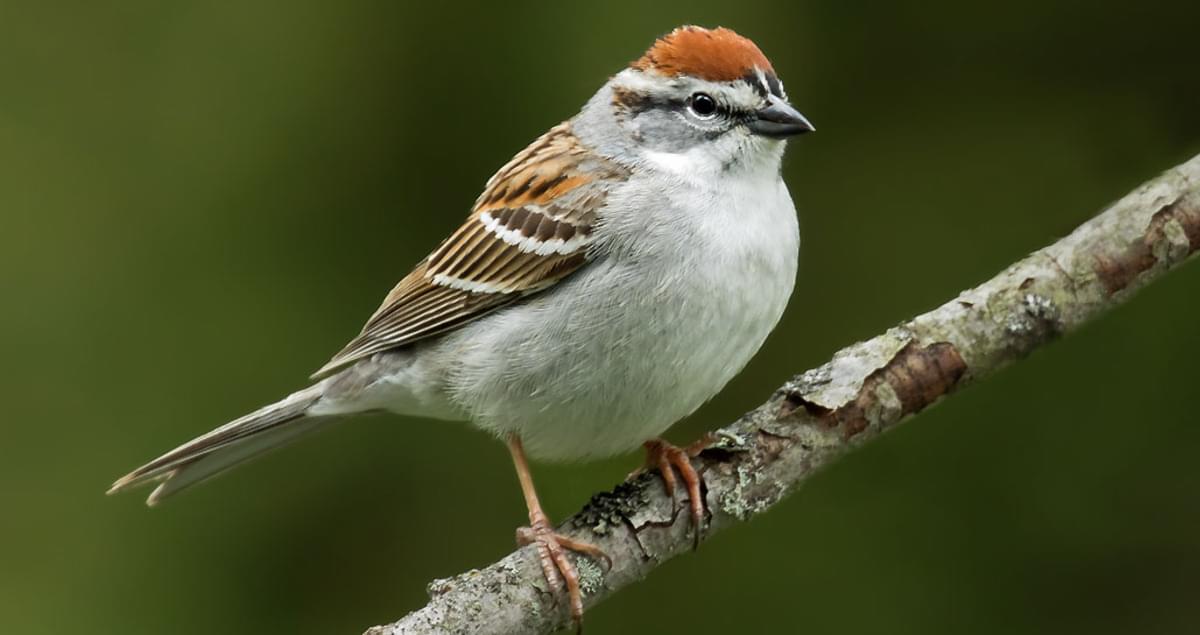
Chipping Sparrow
There are a lot of finches and sparrows that I struggle to differentiate between, but the chipping sparrow is relatively easy to identify, based on its small size, rusty red cap, and black eye stripe. The pattern and color on its wings is similar to a house sparrow, but it is much smaller and the rusty patch on the male house sparrow's head does not cover the top of the head. In addition to a long, sharp trill, it makes a repeated "chip chip chip" from which it gets its name.
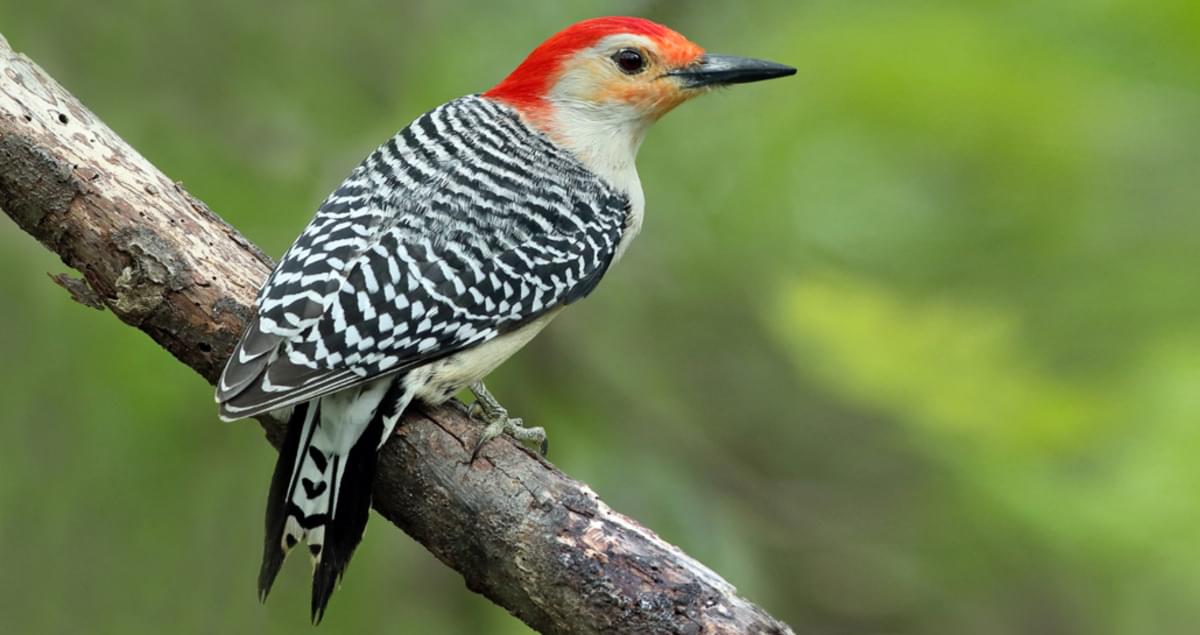
Red-Bellied Woodpecker
This woodpecker looks a lot like a flicker at first glance, but although they are the same size, the red on its head goes all the way over the top, and the black-and-white mottling is only on its wings and back, leaving its belly pure white, unlike the flicker's gray polka-dotted belly. They have a short, rasping squawk which is hard to describe but easy to recognize. I heard them in the trees many times before I finally saw one at the feeder.
Song Sparrow
Another small finch/sparrow-type bird that can be hard to distinguish, the dark streaks on the song sparrow's belly help to identify it, as well as its brown eye stripes. Not surprisingly, the best way to identify it is through its long, melodic, trill-laden song, which you are most likely to hear early in the morning. Like many other sparrows, it also has a loud "chip! chip!" alarm call.
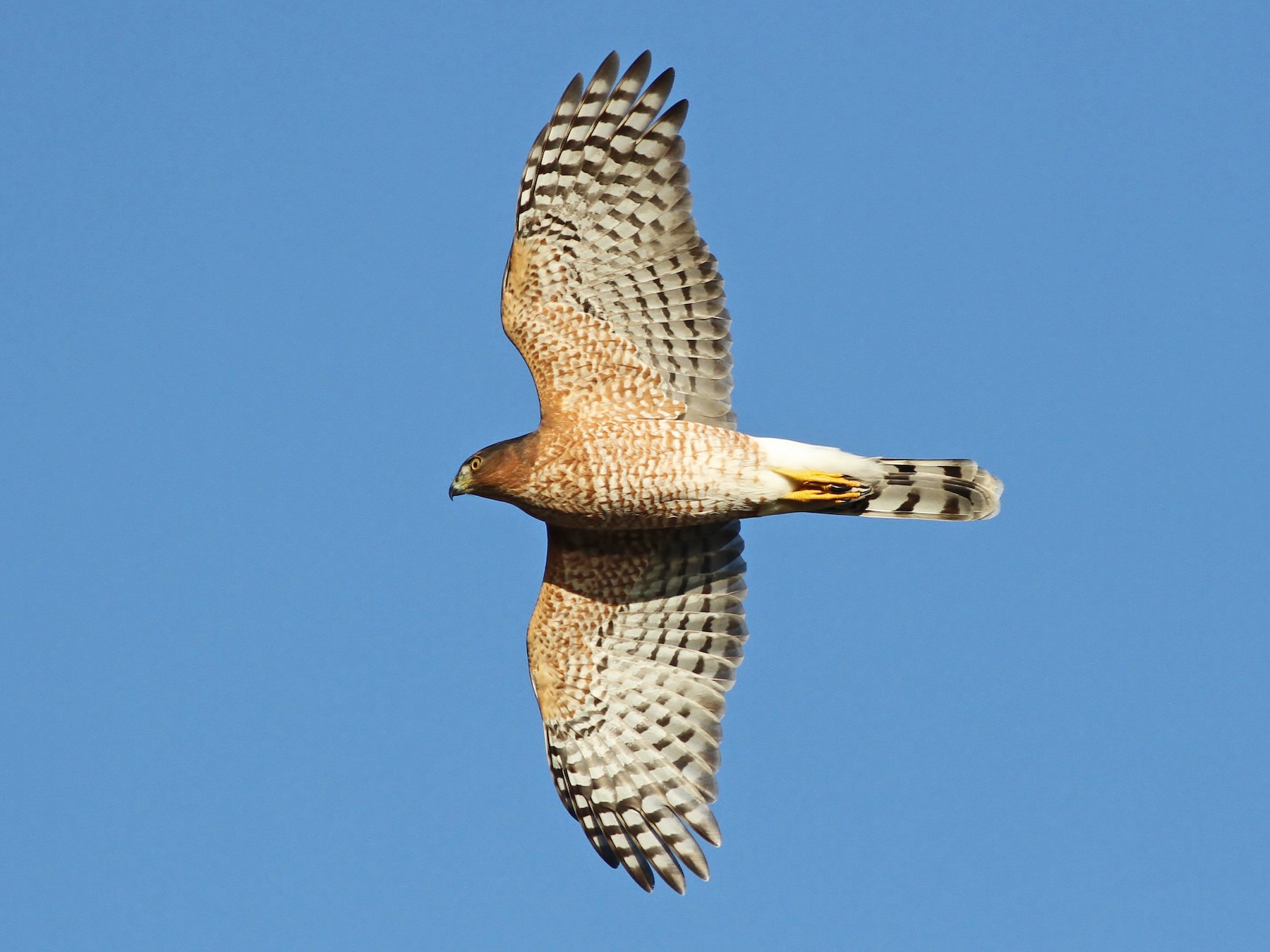
Cooper's Hawk
Along with red-tailed hawks, we frequently see Cooper's hawks loitering in the trees near the feeder, hoping to catch a plump mourning dove unawares. The easiest way to tell the two types of hawk apart is to look at the tail in flight. The red-tailed hawk's tail is not only distinctly reddish (usually although not always), it is also short and fan-shaped, while the Cooper's hawk has a much longer, narrower tail.
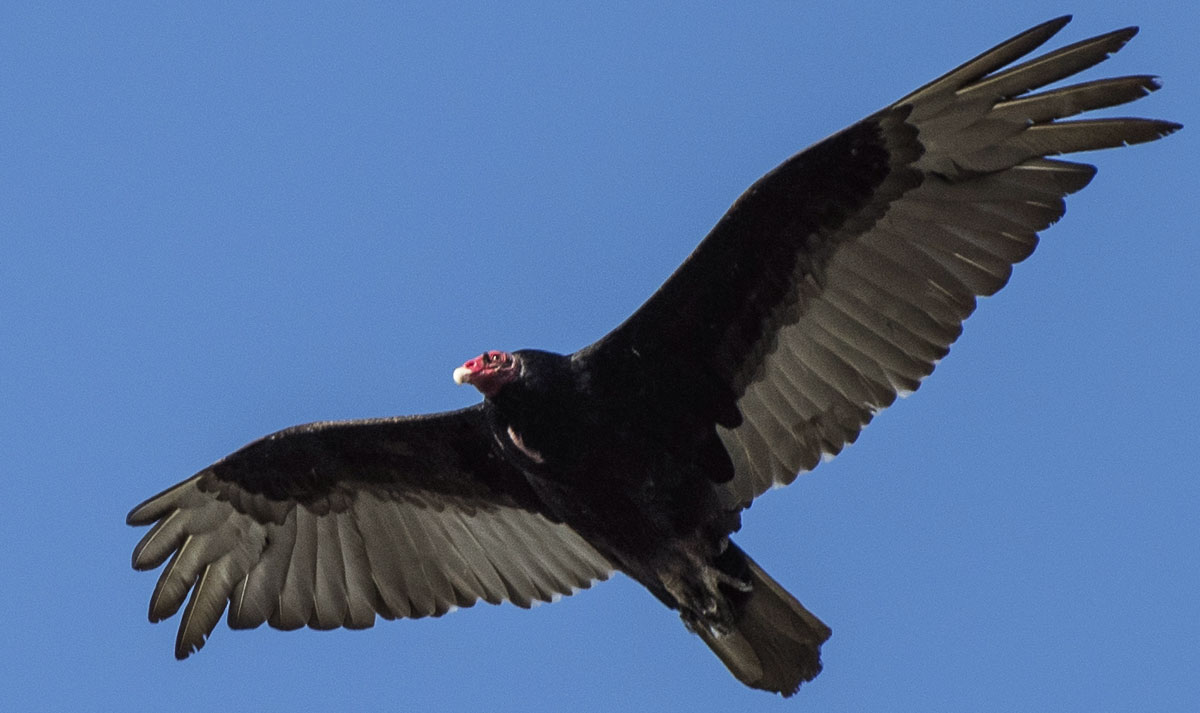
Turkey Vulture
Another raptor we see regularly is the turkey vulture. Since the bright red head is often difficult to see while the birds are flying high overhead, the easiest way to distinguish them from the hawks we frequently see is their flight pattern. The vultures have a noticeable "bobble" when they soar, and they tend to hold their wings in more of a "V" position when seen head-on, as opposed to the flatter profile of most hawks. They are also larger than red-tailed hawks, but size can be hard to distinguish in flight. Although hawks will frequently roost in trees near the bird feeders watching for potential prey, the vultures have no interest in the songbirds that frequent backyard feeders.
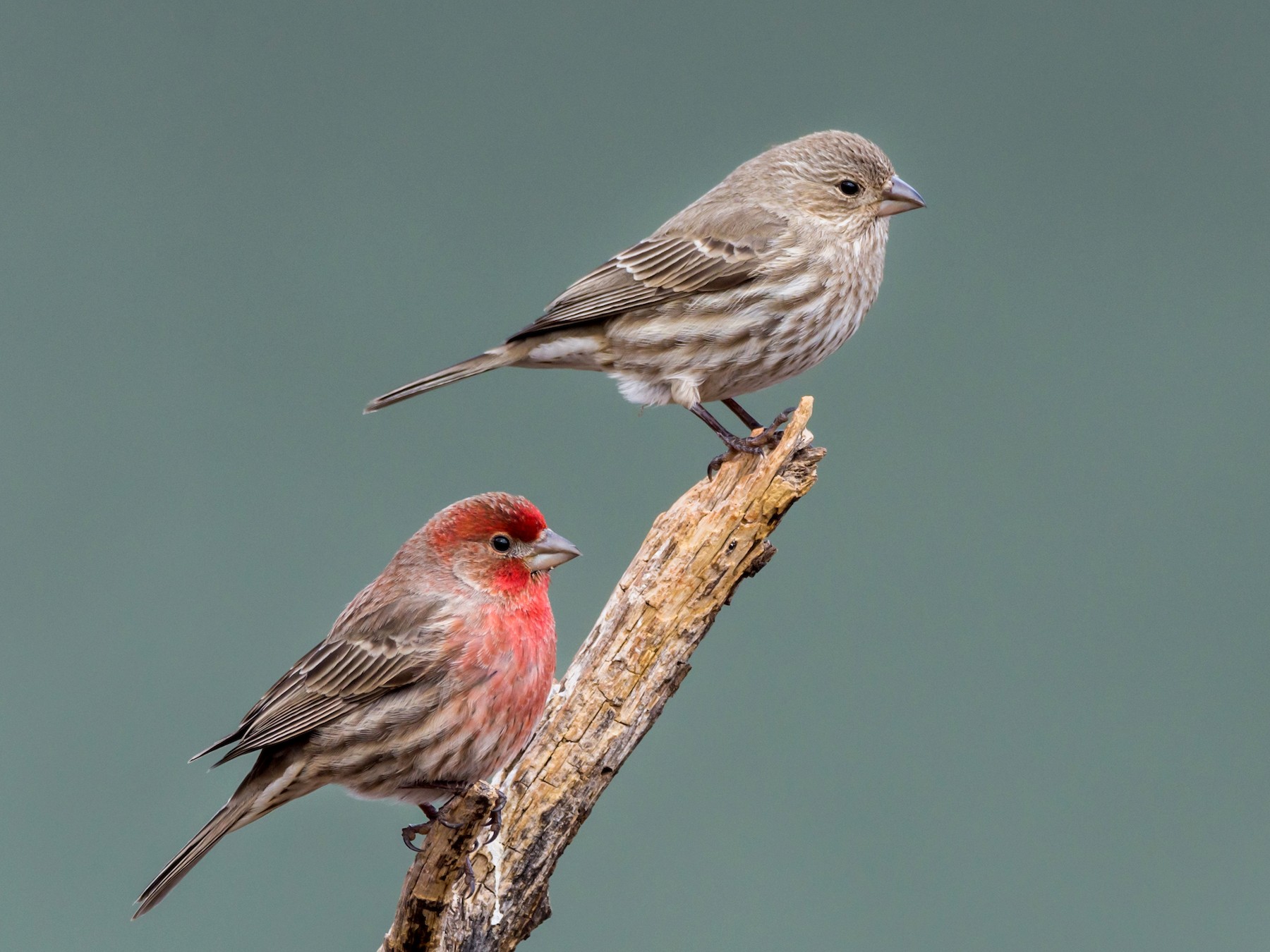
House Finch
Let's start with a disclaimer: I cannot tell the difference between a male house finch and a purple finch. Even when I look at photographs comparing and contrasting the two, I can't see the differences described. So I'm grouping them together as house finches, merely because it sounds like house finches are more common. Another example of big differences in coloring between the sexes, the males have a bright to dark red faces and breasts, while the females are mottled brown all over. (Note: I learned while researching for this blog that finches are more likely to have sexual dimorphism than sparrows, so when trying to determine between the two, that's a good starting place!) The female finches closely resemble song sparrows, but lack the sparrow's head stripes, and the streaks on their bellies go all the way to their feet, as opposed to the sparrow's which fades out at the chest.
Now get out there and enjoy watching those birds!

 Posts
Posts


/am-robin-594ec95a3df78cae81dca55a.jpg)