Showing posts with label Word of the Day. Show all posts

Monday, October 9, 2017

Top Fifteen "Words of the Day"

I begin most days by asking my Alexa to play the daily "flash briefing," a combination of news reports from CNN, BBC, and Fox news, the weather report for the day in my area, and - my favorite part of the briefing - the Merriam-Webster Word of the Day. I enjoy the WotD for a number of reasons, including: 1) it opens with a great jazz lick, 2) it's narrated (and, I believe, written) by a high school friend of mine, Peter Sokolowski (excellent article about Peter's podcasts here), 3) it provides fascinating etymology and background information on each word as well as quotes from literature and newspaper articles using the word in its proper context, and 4) the words themselves are fascinating and unusual without being obscure or archaic. Here are a few of my favorites from the past few months. (The complete M-W entry is linked for each word, and you can click here to request the daily WotD email.)

Vituperate (October 5): "to criticize or censure severely or abusively; to use harsh condemnatory language." Suggested synonyms include "berate" and "revile", but to me, "vituperate" carries even stronger implications of ongoing condemnation and even moral outrage. I also just like the sound of it. That sharp consonants are just begging to be spit out in disdain.

Salubrious (October 3): "favorable to or promoting health or well-being." Another word that's especially fun to say (especially if you really lean on that "yoooooo" syllable in the middle), "salubrious" has a hint of elegance and almost arrogance, as if the person enjoying the salubrious experience feels himself better than the person to whom he is speaking.

Amanuensis (September 18): "one employed to write from dictation or to copy manuscript." I remember reading this word in some novel or other when I was quite young, and I also remember impressing a new employer when he overheard me describing myself as his amanuensis. (Since he was not a native English speaker, I was impressed right back that at his familiarity with the word.)

Scrupulous (September 5): "having moral integrity : acting in strict regard for what is considered right or proper; punctiliously exact: painstaking." Most of us are familiar with the words "unscrupulous" and "scruple," but we rarely "scrupulous," which comes from the same root. I like this word because you can figure out the meaning easily even if you've never heard it before.

Bifurcate (August 14): "to divide or cause to divide into two branches or parts." Some may think of this as an unnecessarily fancy word for a very simple concept, but I like its descriptive elegance. I also like its use for non-physical division, such as a word whose use over time has extended to have two different meanings (as in the example of the word "secretary" given in the M-W entry).

Yawp (July 16): "to make a raucous noise: squawk; clamor, complain." I'm a great fan of onomatopoeia, and "yawp" certainly qualifies. If "blah, blah, blah" refers to someone droning on meaninglessly, "yawp, yawp, yawp" would be a good description for someone squawking on meaninglessly and loudly.

Turpitude (July 8): "inherent baseness: depravity." I don't believe I've ever heard this word used outside of the phrase "moral turpitude." In fact, both quotes offered by the M-W entry use the phrase. With a bit of googling, I was able to find "turpitude" not preceded by "moral" in a 1798 court decision called Farmer v. Russell: "In this case the plaintiff does not come into Coirrt with clean hands; he alleges his own turpitude, and is indictable for his fraud."

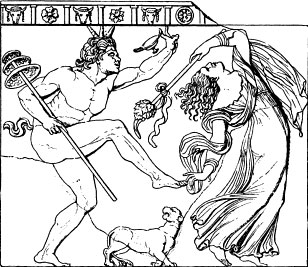
Dithyramb (July 2): "a usually short poem in an inspired wild irregular strain; a statement or writing in an exalted or enthusiastic vein." The word "dithyramb" sounds so buttoned-up and scholarly and Latin-root-y, but it carries with it a certain exuberance and rebelliousness that is totally at odds with the traditional, conservative image of a scholar or poet.

Argy-bargy (June 25): "a lively discussion: argument, dispute." I love this word because it implies some ridiculousness in the argument, as exemplified in the quote referenced by M-W, given by a reporter for The Daily Telegraph in April 2017: "I would object to the leaders' debates much less if they took place only on the radio. Then there wouldn't be all the argy-bargy about who stands where, wearing what."
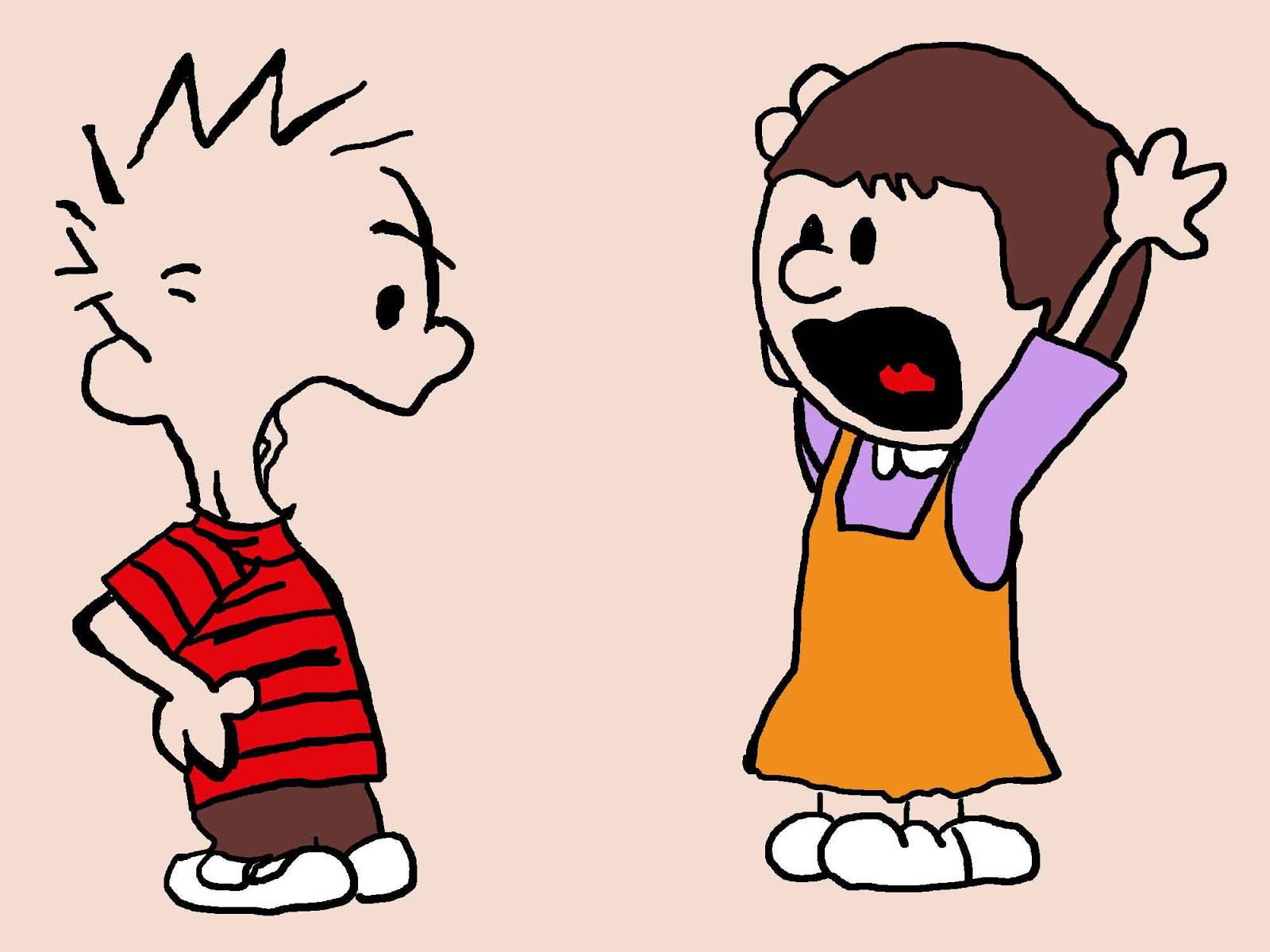
Squinny (June 9): "to look or peer with eyes partly closed: squint." Another great and useful word I'd never heard before, it's difficult to ascertain the meaning of "squinny" without context, but once you know the definition, it's easy to remember. The next time someone gives you the side-eye, tell them to stop squinnying at you.

Concatenate (May 27): "to link together in a series or chain". Like "squinny," although it may be difficult to figure out the meaning of "concatenate" without context, the definition is fairly easy to remember. Also, it's fun to say, and it's even more fun to say in its noun form, "concatenation".

Lanuginous (May 9): "covered with down or fine soft hair". This may not be one of the more useful words on this list, but I do like that English has a word for this concept. Parents, particularly expectant mothers, may recognize the noun form "lanugo" from having been warned by an obstetrician that babies (especially premature babies) can be born with a covering of downy hair.

Tatterdemalion (April 19): "ragged or disreputable in appearance; being in a decayed state or condition: dilapidated." The word is practically visual onomatopoeia. I can imagine a mother or a housekeeper shaking her head in disdain at the state of some youngster's clothes or bedroom. It's a very Dickensian word that I can imagine being used to describe Fagin or Bill Sykes. My own children have been known to appear somewhat tatterdemalion on occasion. I consider it a sign of a healthy childhood.

Gimcrack (April 4): "a showy object of little use or value: gewgaw." I love how many different words English has for this item: gimcrack, gewgaw, geegaw, tchotchke (technically Yiddish but commonly used by English speakers), knick-knack, dustcatcher, trinket, etc. Whatever it is, we all have plenty of them, so it seems apropos that we also have plenty of words to describe them.


If you found these words interesting, check out the Merriam-Webster Word of the Day archives!


Bookmark and Share

Friday, September 14, 2012

Verbing Makes Me [sic]


I was listening to a radio commercial this morning for an HVAC company that was touting how its product can heat and cool rooms individually. Except they didn’t use the words “heat” and “cool.” Instead, they claimed that their system will “comfort” each room in your house independently. “Comfort”? Since when is the word “comfort” a verb?? Well, okay, it CAN be a verb, as in “When my baby cries, I comfort her.” But this ad was taking the NOUN “comfort,” which means “a state of ease or satisfaction of bodily wants,” and making it into a verb. It was verbing it, if you will.

The concept of verbing is something of a distressing trend to me. And it is becoming amazingly common. Thanks to Facebook, the noun “friend” is now a verb, as in “An old classmate friended me the other day.” How about “dialogue”? That’s a lovely little noun that has been verbed in recent years. We don’t converse any more, we “dialogue.” I read about a flight attendant who apologized to her passengers that there would be a short delay in “beveraging” them. Really? “Beverage” is now a verb? Will we all be drinking from a trough full of Coke, like when you water a horse? And if you want to give someone a present, you now “gift” it to them. Why can’t you just give it to them? It’s not any longer or harder to pronounce or spell. Its only improvement over the original is that it makes the heads of grammar Nazis like me explode.

Sometimes it works in reverse, making a noun out of a verb. (Thank goodness, I’ve yet to hear the word “nouning” to describe the phenomenon.) The word “invite,” for example, which used to be a verb meaning “to request politely or formally,” is now a noun meaning “invitation.” Was there something wrong with the word “invitation”? Were four syllables just too overwhelming? Is that really such a problem that we needed to cut the length of the word in half?

I think what bothers me most about verbing is that there are so many delicious words already existing, and adding new ones merely serves to further limit the use of those words. When new words are used to introduce shades of meaning and describe things that did not previously exist, then I’m all in favor of adding them to the lexicon. But making the word “gift” into a verb doesn’t add anything. There is absolutely zero difference between “give” and “gift” other than the fact that no-one would ever have used the word “gift” as a verb 20 years ago. Ditto for the words “invitation” and “invite.” The language did not become richer or more descriptive by adding that new use.

So let’s all work on combatting this trend by bringing back the wonderful, descriptive verbs of years gone by. From Merriam Webster’s Word of the Day archives, how about these beauties: gambol, undulate, gainsay, bloviate, belaud, pervade, kowtow, inspissate, oppugn. (Yeah, I said “oppugn.” Go look it up.) Or a few glorious rarely-used nouns, like incunabulum (INCUNABULUM!!!!), scaramouch (Freddy Mercury knew what it meant, do you?), marplot, tucket, luciferin. And I must throw in a few other parts of speech just to be fair: lugubrious, gibbous, anthophilous, florid. THOSE are words, my friends. They look beautiful in writing, they feel lovely rolling off your tongue, they make you feel smart just using them correctly in a sentence.

But at the absolute least, let’s all get back to our grammatical roots by taking a little trip back to Saturday morning circa 1978.
Those are verbs that won’t make anyone [sic]!
Bookmark and Share