Showing posts with label Blogging for Books. Show all posts

Friday, December 1, 2017

Book Review: "The Fifth Petal" by Brunonia Barry


Having grown up in the North Shore area of eastern Massachusetts, I am very familiar with the city of Salem and its well-known history of "witch hysteria." Brunonia Barry's "The Fifth Petal" is set against a backdrop of modern Salem, but also delves into its history (both in the 1600s and its more recent history), and Barry does a good job at creating a realistic picture of both settings. Although I wouldn't classify it as a paranormal novel, it certainly includes elements of the paranormal, or at least of some degree of mysticism and new age ideas - which is to be expected, given its setting. For the most part, these elements were incorporated into the plot in a way I was willing to accept for the sake of the story, but I did find the repeated, overly-detailed descriptions of the main character's use of "sound healing" to be heavy-handed and unnecessary.

The plot itself was intriguing: a young girl, Callie, witnesses the murder of her mother and two other young women, but the murder is never solved. Some years later, another murder occurs which may somehow be connected to the earlier case, and the now-grown Callie tries to dig back into her memory and her subconscious to provide some details that could help find the killer.

The author does a credible job of jumping back and forth between the present and the past as Callie slowly remembers bits and pieces of the night of the murder. She doles out subtle clues as we explore the often tangled relationships of the various townspeople and gives hints as to who might have a motive for the murders. I found the various plot twists to be somewhat on the "soap opera" side, but if you don't mind some larger-than-life drama, this book may be to your taste.

The bottom line is that this was a fun and fluffy bit of reading that will be enjoyable especially to those interested in new age ideas and the occult, but still tolerable to those who prefer a bit more realism.

I received this book for review from Blogging for Books. For more information about The Fifth Petal by Brunonia Barry, please see the Penguin Random House website.


Bookmark and Share

Friday, June 30, 2017

Book Review: "Hag-Seed" by Margaret Atwood


Many authors have re-envisioned Shakespeare's plays using contemporary settings and contemporary language, with  varying degrees of success.  What makes Margaret Atwood's "Hag-Seed", a re-envisioning of Shakespeare's "The Tempest", so interesting is that it includes a re-envisioned performance of the play within a reimagined and modernized version of the plot.  It is, essentially, Shakespeare within Shakespeare.

The inner version of the play is a performance put on by prison inmates.  They paraphrase and modernize the language, creatively interpret the costuming, and stage the performance by way of video editing rather than a strictly traditional live performance.  The outer version of the play is the story within which the actual play is produced, a story which parallels the plot of "The Tempest."

Director and actor Felix has had a highly successful run of organizing (and directing, and starring in) an annual Shakespeare festival, staging new versions of many of Shakespeare's plays. That is, until his assistant Tony stages a coup, takes over his position, and gets Felix blacklisted.  Felix, devastated, withdraws from society and the theatre scene.  We learn that Felix had lost his wife in childbirth and then his beloved daughter to an illness only a few years later.  He imagines that his daughter, Miranda, is still with him, growing up and becoming a young woman.  He knows it is only a fantasy, but it keeps him sane to imagine being with her in his self-induced exile.  After a few years he is ready to reenter the theatre world, but only under a pseudonym, and only with actors who have no chance of recognizing him from his former life.  He gets a job teaching English literature to medium security prison inmates (under the pseudonym Mr. Duke), and he uses Shakespearean drama as his main teaching tool.  After several successful years, he discovers that his old nemesis, Tony, along with several other important politicians, plans to visit the prison, with the intention of canceling the funding of the English program.  Felix plots his revenge using a production of The Tempest and the assistance of several technologically savvy inmates. (Atwood cleverly weaves in some themes from Hamlet, a bit of "the play's the thing, wherein I'll catch the conscience of the king.")

Admittedly, there are several aspects of the plot which are dubious, at best.  It takes some willing suspension of disbelief to accept that a prison would hire a teacher without a full background check, that important politicians would enter a prison unescorted by armed guards of any kind, or that they would willingly eat food at the prison after being attacked and restrained by the inmates.  However, the characters and the plot are intriguing enough for the reader to skip over minor plot holes such as this.

As a fan of Shakespeare in general, and of "The Tempest" in particular, I really enjoyed the parallels between the outer story and the original material.  I suspect there are some parallels and details that would be missed by a reader with less familiarity with the original play, but the story is interesting enough and well-told enough that it is worth reading even for a reader who has never read "The Tempest."  The plot of the play within the story is explained enough to make many of the parallels clear without any previous familiarity with Shakespeare's work. In addition, the inmates' final analysis of their characters is a fascinating study that is likely to encourage the reader to go back and read (or re-read) Shakespeare's play. 

I enjoyed this novel very much, and would recommend it to Shakespeare fans and non-fans, alike. 


I received this book for review from Blogging for Books. For more information about Hag-Seed by Margaret Atwood, please see the Penguin Random House website.


Bookmark and Share

Saturday, April 15, 2017

Book Review: "My Life to Live" by Agnes Nixon


If you've heard of any American soap operas at all over the last fifty years, there's a pretty good chance you're familiar with Agnes Nixon's work. The creator and longtime head writer of the soaps "All My Children," "One Life to Live," and "Loving," and head writer of "Search for Tomorrow," "Guiding Light," and "Another World," this autobiography/memoir describes Nixon's career and life paths - and how the two influenced each other. 

Not surprisingly, given that the author won multiple Emmys and Writers' Guild of America awards for her writing, this book is a beautifully written and poignant story of a talented and determined woman forging a career in a male-dominated field, without sacrificing her femininity or her home life. Nixon begins her story in her tumultuous childhood; her mother and her often-absent father's rocky, on again-off again relationship doubtless inspired many of the passionate yet dysfunctional relationships depicted in her storylines through the years. Nixon narrates the difficulties of her life, not in a self-pitying way, but in a way that demonstrates her inspiration to depict interesting, sometimes tormented, emotionally moving relationships. Events and people as diverse as her beloved fiancee, who was killed in action during World War II; a tutor who introduced her to the drama of opera and Shakespeare; her father, who continuously made her promises that he never kept, alternately cajoling and threatening her; loved ones suffering from disease - all these found their way into her writing, whether as directly as a plotline of a character suffering from that same disease, or as subtly as an understanding of a character's egotistical, narcissistic personality. 

Nixon had to continually fight for her career. She was fired from various jobs; told that she couldn't address "sensitive" issues like cancer, homosexuality, teen pregnancy, drug addiction, and racial prejudice; threatened with lawsuits for collusion; even called an irresponsible and uncaring mother. But she persisted in following her dream, working long hours with no days off, continually fighting for and defending her choices and her work. And the result is that she became the first female writer inducted into the Soap Opera Hall of Fame, a legend in the world of television. Her legacy lives on in her influence on every soap opera currently on television. She was truly a visionary and a pioneer, and her story is as fascinating and intriguing as the scripts she penned for more than 40 years. 


I received this book for review from Blogging for Books. For more information about My Life to Live by Agnes Nixon, please see the Penguin Random House website.


Bookmark and Share

Monday, March 13, 2017

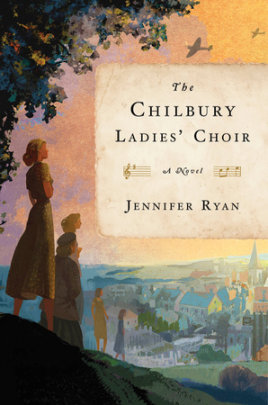
Book Review: "The Chilbury Ladies' Choir" by Jennifer Ryan


A meek widow, an unscrupulous midwife, an ambitious 13-year-old girl, a self-absorbed teenage beauty, a domineering society matron, a Jewish refugee child: these are among the fascinating characters we meet in  Jennifer Ryan's "The Chilbury Ladies' Choir." The Ladies' Choir forms during World War II when the absence of most of the menfolk in the small English village of Chilbury results in the local vicar disbanding the church choir. The women are at first disappointed, but no one is willing to protest, until a local (female) music professor posts an announcement that she is forming a ladies' choir. At first there is a mixed reaction from the locals, everything from excitement to shock. But the ladies soon find themselves "wondering why we'd been closed down in the first place, why the Vicar had so much say over us. And, more to the point, why we'd simply let him do it." This is the beginning of these women questioning the way everything had always been done, and the beginning of many personal journeys of change.

"The Chilbury Ladies' Choir" is a fascinating study of how war affects those who are left behind on the home front, how the women are changed because of the changes around them. Each of the delightful characters in this book takes a clear journey because of the events of the war: the meek becoming stronger and more self-confident; the self-absorbed seeing the importance of those outside themselves; the fearful and lonely learning to trust in and rely on others; each woman seeing herself not just as an individual, but as part of the greater sisterhood of humankind who must work together for the greater good.

The story is told in the form of journal entries and letters, with each woman describing her own thoughts and experiences. This technique allows for a delightful variety of tone with each character. Mrs. Tilling, the widow, is thoughtful and introspective; Kitty, the young girl, is exuberant and curious; Miss Paltry and Venetia, the midwife and the beauty, respectively, send letters in which they admit their "wickedness", at first with delight and then with fear and concern and perhaps a dash of guilt.

The charm of this book is how believable each character - and her journey - is. There is no sudden, inexplicable jump from A to B, but instead there is a slow revelation of each woman's thought process as she discovers strengths - and occasionally weaknesses - inside herself which are brought out by the unusual situations and needs brought on by war. The women are brought together by joining the choir, and they learn to rely on themselves and on each other, despite (and in some cases, because of) their differences, in order to make the choir succeed. But the choir is really just a symbol of how the women are brought together by the war. Mrs. Tilling sums it up in her journal when she states, "Funny how a bit of singing brings us together. There we were in our own little worlds, with our own problems, and then suddenly they seemed to dissolve, and we realized that it's us here now, living through this, supporting each other. That's what counts."

If you love British period television shows like "The Crown," "The Bletchley Circle," "Call the Midwife," "Brideshead Revisited," and even "Downton Abbey," you will thoroughly enjoy the characters and settings of "The Chilbury Ladies' Choir." There's enough intrigue in the form of illicit (and "licit") affairs, unplanned pregnancies, sibling rivalry, spies and double agents, deaths, and even baby swapping to keep you turning the pages, yet nothing feels forced or unrealistic. We all know people like each of these characters; whatever "village" we may be a part of, they are a part of it as well.


I received this book for review from Blogging for Books. For more information about The Chilbury Ladies' Choir by Jennifer Ryan, please see the Penguin Random House website.

Bookmark and Share

Thursday, March 2, 2017

Book Review: "The Kindness Challenge " by Shaunti Feldhahn


I'll admit that writing this book review was something of a challenge for me. It wasn't exactly a bad book, it was just kind of...obvious. The information presented isn't without merit, but it strikes me as information that is common sense to 95% of the population. The premise of the book is essentially, "Be kind to anyone you want to have a successful relationship with." Perhaps because I grew up surrounded by healthy relationships, I already understand the need for kindness, and I already know the practical ways to show kindness to my romantic partner, my family members, and my friends. I guess that those who grew up in dysfunctional families, who were never modeled a healthy relationship, might benefit from this book. But I suspect that it is the exception, not the rule.

Feldhahn spent ten years surveying people about what makes a relationship successful, and includes many anecdotes from this research in the book. The result of those years of research is a program she calls "The 30-Day Kindness Challenge". Throughout the book, she encourages the readers to sign up on her website to take the challenge and receive daily email reminders and "personal assessments". Although there are some worthwhile suggestions, I felt like they were buried too deeply in personal "success stories" and salesmanship. The whole feel of the book was like one of those timeshare presentations you have to sit through to get free tickets to Disneyland. The annoyance just wasn't worth the payoff. 

I guess my bottom-line recommendation is that if you grew up in a dysfunctional family, and your "normal meter" isn't well-calibrated, you might pick up a few tips from this book. But I think your money would be better spent on a good therapist. 


I received this book for review from Blogging for Books. For more information about The Kindness Challenge by Shaunti Feldhahn, please see the The Kindness Challenge website.

Bookmark and Share

Tuesday, November 29, 2016

Book Review: "Dear Mr. M" by Herman Koch

I read a lot of mystery novels, so there are not a lot of twists and conventions and formulas that I have not seen before. But Herman Koch's "Dear Mr. M" began and ended with twists that I found new and intriguing.

The book opens in the form of a letter, in the words of the title itself: "Dear Mr. M". It's not clear at first, who is writing the letter, nor who is being addressed in the letter. Mr. M. is established as being the author of a novel based on a true crime, and someone personally known to the letter writer. But perhaps not exactly personally known by the letter writer - the letter writer knows about Mr. M's life, but does Mr. M know him? Or is the letter writer a stalker, perhaps even a criminal? Or perhaps it is Mr. M. who is the criminal, being stalked by the letter writer who knows his crimes? The author tantalizes us with clues, not even telling us right away what crime has been committed, never mind by whom it was committed.

Over the course of the novel, we meet the various players in the unfolding scenario: a group of high school friends, and a teacher who has an affair with one of the students and later disappears. Is he dead, or did he merely change his identity and walk away from his life after the affair is broken off? Is he, himself, Mr. M? Is Mr. M one of the students, perhaps even the murderer - if a murder was even committed? Koch gives the reader just enough clues to keep him interested, allowing a single piece of the puzzle to fall into place before tossing in another confusing clue.

The true test of a clever mystery is, of course, to keep the reader guessing until the very end, and Koch accomplishes this in spades, saving one final twist until nearly the last page of the book. The most effective plot twists are not ones that stretch credulity, but that make the reader realize that the twist is perhaps the only possible outcome, given the clues and hints the author has scattered throughout the book. And the revelations in the final chapter were so well done in this case that it actually made me immediately turn back to the first page and re-read the whole entire book with new eyes.

I found Koch's use of language to be lovely and descriptive, although occasionally it becomes clear that the novel is a translation from the original Dutch, as dialogue is sometimes stilted or feels unnatural to the English-speaking reader's ear. But on the whole, I enjoyed the writing style as much as the plot itself.

On the whole, I found "Dear Mr. M" to be an intriguing mystery, full of interesting and realistic characters, with a story that kept me involved and guessing until the surprising - and satisfying - ending.


I received this book from Blogging for Books for this review. For additional information on this book, please see the Penguin Random House website.

Bookmark and Share

Tuesday, April 12, 2016

Book Review: "Mother, Can You Not?" by Kate Siegel


The first paragraph on the book jacket of “Mother, Can You NOT?” by Kate Siegel reads, “There is nothing more wonderful than a mother’s love. There is also nothing more annoying. Who else can proudly insist that you’re perfect while simultaneously making you question every career, fashion, and relationship decision you have ever made?” This dichotomy may not be unique to Jewish mothers and daughters, but something about Jewish culture gives it great potential for humor.

Unfortunately, the potential for humor was not entirely realized in this book. Written in a combination of narrative and screenshots of text exchanges between mother and daughter, Siegel’s description of her relationship with her mom as a child seems to be one of public humiliation and lack of personal space and boundaries. Her mother (who refers to Siegel as “Spawn” throughout the book) seems to revel in making her daughter cringe by revealing personal information publicly, talking loudly about everything from menstruation to masturbation to Kegel exercises to penis sizes, all in great detail. Had this story been in the context of a genuinely loving and respectful relationship, mingling in a few of these exchanges would have been funny, even hilarious. But there were too few moments that made me feel like this was a healthy, supportive relationship. I spent more time cringing than I did laughing.

I really wanted this book to depict a relationship with an outgoing, larger-than life mama bear who wanted the best for her daughter but occasionally crossed a line, but instead I got the story of an overbearing narcissist who wanted her daughter to go to an Ivy League college, marry rich, and have a successful career for her own bragging rights, regardless of her daughter’s wishes. I couldn’t bring myself to like either of these women.

But the most frustrating part was that there were a few moments that did hit the right notes. About halfway through the book, there was a lovely scene where the college-aged daughter has just sent a male friend a long letter declaring her undying love for him. Her mother advises against sending the letter, but stops short of actually preventing her from sending it. The situation goes about as you would expect, and naturally, heartbreak ensues. But, as the author writes, “…my mother knew that letting me suffer was the only way to help me grow up: ‘Sometimes, you have to get your heart broken to find your way around the penis.’“ That is the kind of writing that would have redeemed this book. That is the balance between a genuine relationship and the humor that can come from a blunt and unfiltered approach to sexuality.

Although I found this book disappointing, Siegel displays a clever writing style, and if she can work in more depth and fewer one-liners, her future work could very well be worth reading.


I received this book from Blogging for Books for this review. For additional information on this book, please see the Penguin Random House website


Bookmark and Share

Monday, March 28, 2016

Book Review: "And After Many Days" by Jowhor Ile


And After Many Days by Jowhor Ile appears at first to be a book about a son who goes missing. Told from the perspective of the younger son, Ajie, the book opens with a description of the Utu family on the day that Paul, the older son, leaves the house to visit a neighbor and never comes home. But it soon becomes obvious that this book is not primarily about the family’s search for the missing son, or even about how they are affected by his loss. It is simply about a family, and Paul’s disappearance serves merely as a turning point between “Then” and “Now”, as we go look back into the past and explore the family relationships prior to the disappearance and then continue on afterwards as the family carries on without Paul.

Set against a backdrop of war-torn Nigeria in the 1990s, the contrast between the culture and the political unrest of the period, which is so completely foreign to most North American and European readers, and the typical issues of the family, which are so familiar, is what is most striking. Paul, Ajie, and their sister Bibi experience typical sibling squabbles, vying for their parents’ attention and affection, developing their own identities as they grow up, struggling with school and friendships and figuring out their own futures. We can all identify with Ajie’s frustration at being blamed for fights he didn’t start, the children’s admiration of their father, the youngsters’ excitement at their first taste of independence as they leave home to attend boarding school. These feelings are universal. It is easy to forget the different world that this family lives in until outside events break in: students are killed by corrupt police; Ma tells the children the story of how their father’s mother gave birth to two sets of twins, who were all drowned and the second set blinded, to prevent them “from seeing their way back to this same family to cause sorrow”; a group of activists are hanged after a mockery of a trial. These events are shocking to most readers. Life is cheap in this world, and it must go on even when a son goes missing.

Ile creates a beautiful picture of this family, deftly bringing in stories of the parents’ pasts and experiences of neighbors and friends to create a clear picture of the world that has formed these individuals into the family they have become. Much like Ajie, we become so wrapped up in the lives of those who are left that we temporarily forget about Paul, and then feel guilty when we remember. At the end of the book, when we finally learn Paul’s fate, it is, in some ways, merely another moment in the life of these people, no more or less important than any other. It is something that must be accepted, because it has happened and cannot be changed. But it highlights the fact that Ajie’s life went on without his brother. He followed his own path, becoming an adult in this unpredictable world in which men are executed without a trial and brothers disappear without much of a police inquiry.

Ile sums up the point of this book in Ajie’s thoughts as he looks at the manuscript of a book his mother has written on native plants: “Even if they become extinct,” he thinks, “at least a memory of them has been preserved and can be called to life any day.” Ajie’s memories of his family, both before and after Paul’s disappearance, keep Paul alive and through them, Paul continues to be a part of the family. Memories, whether those of Ajie’s parents or his own, are a powerful tool that keeps his family together and carries on their history into the next generation.


I received this book from Blogging for Books for this review. For additional information on this book, please see the Penguin Random House webpage.

Bookmark and Share