Posts
Posts


I am not generally a sports-watcher. I might tune in when the home team (in my case, the Red Sox, Celtics, Patriots, or Bruins) is in whatever finals race applies, and I might pay attention for a few minutes if someone in the house is watching sports and acting excited, but I am NOT, by any means, a "sports fan."
But I love the Olympics. Maybe it's that it's only every four years. Maybe it's the exotic locations. Maybe it's the oddball sports that you never see otherwise. Maybe it's the personal, human interest stories they throw in. Maybe it's the spirit of international and national unity. Whatever it is, every four years, you will find me watching sports I have never seen and do not understand, cheering for people I've never heard of.
I may not be able to tell you exactly WHY I love the Olympics, but I can tell you WHAT I love about the Olympics. It's this:
1) The Spectacle of the Opening Ceremony

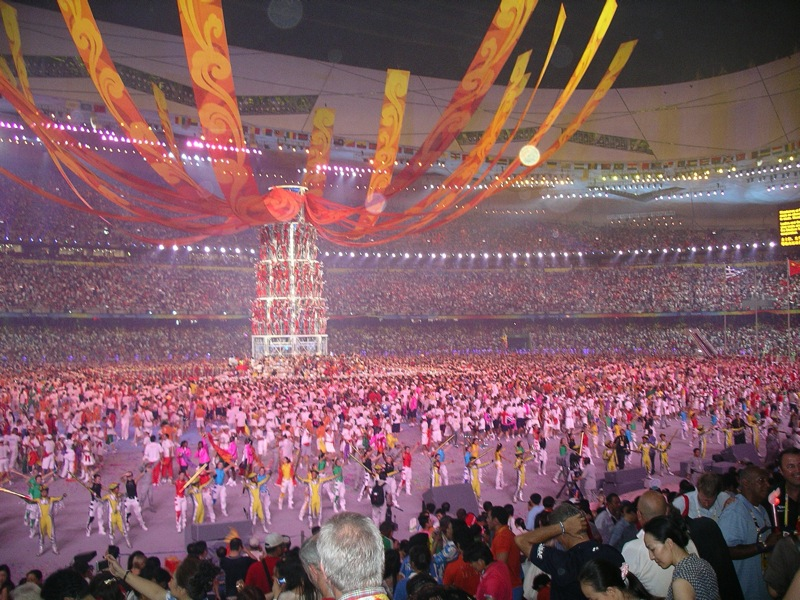
The opening ceremonies are designed to highlight the host country: to celebrate its culture and history. They often draw on references that mystify the rest of the world, but that their own nation understands. They are often, in a word, weird. I remember the opening ceremonies in 1994 in Lillehammer, Norway, featuring odd little troll-like creatures popping out from holes and nooks and peeking around in a rather disturbing fashion. Or London in 2012, when "Queen Elizabeth" and "James Bond" (okay, their stunt doubles) plummeted into the stadium with Union Jack parachutes. Paris was added to the "weird" list in 2024 with its bubble-gum-pink giant paper-mache-headed people, its wall of beheaded Marie Antoinettes, and its drag queens depicting a bacchanal celebration.
Sometimes they're not intentionally weird, but something goes wrong, like the fifth Olympic ring that refused to open in Sochi in 2014.

Or the "Great Dove Calamity" in Seoul in 1988, when the doves representing peace were released but some of them settled on the torch instead of gracefully flying around the arena, and were then burned alive when the torch was lit. Or the awkwardness in Vancouver in 2010 when four athletes were intended to light the torch simultaneously, but only 3 of the 4 columns raised, leaving one of the four athletes standing around with nothing to light.
But amidst the weirdness is incredible beauty and celebration of humanity. Like the archer lighting the torch in Barcelona in 1992. Or Muhammad Ali lighting it in Atlanta in 1996. The 2008 drummers in Beijing in 2008. The pioneers dancing to Copland's "Rodeo" in Salt Lake in 2002. Sochi's gorgeous lighted troika pulling the sun in 2014.
2) The National Team Uniforms
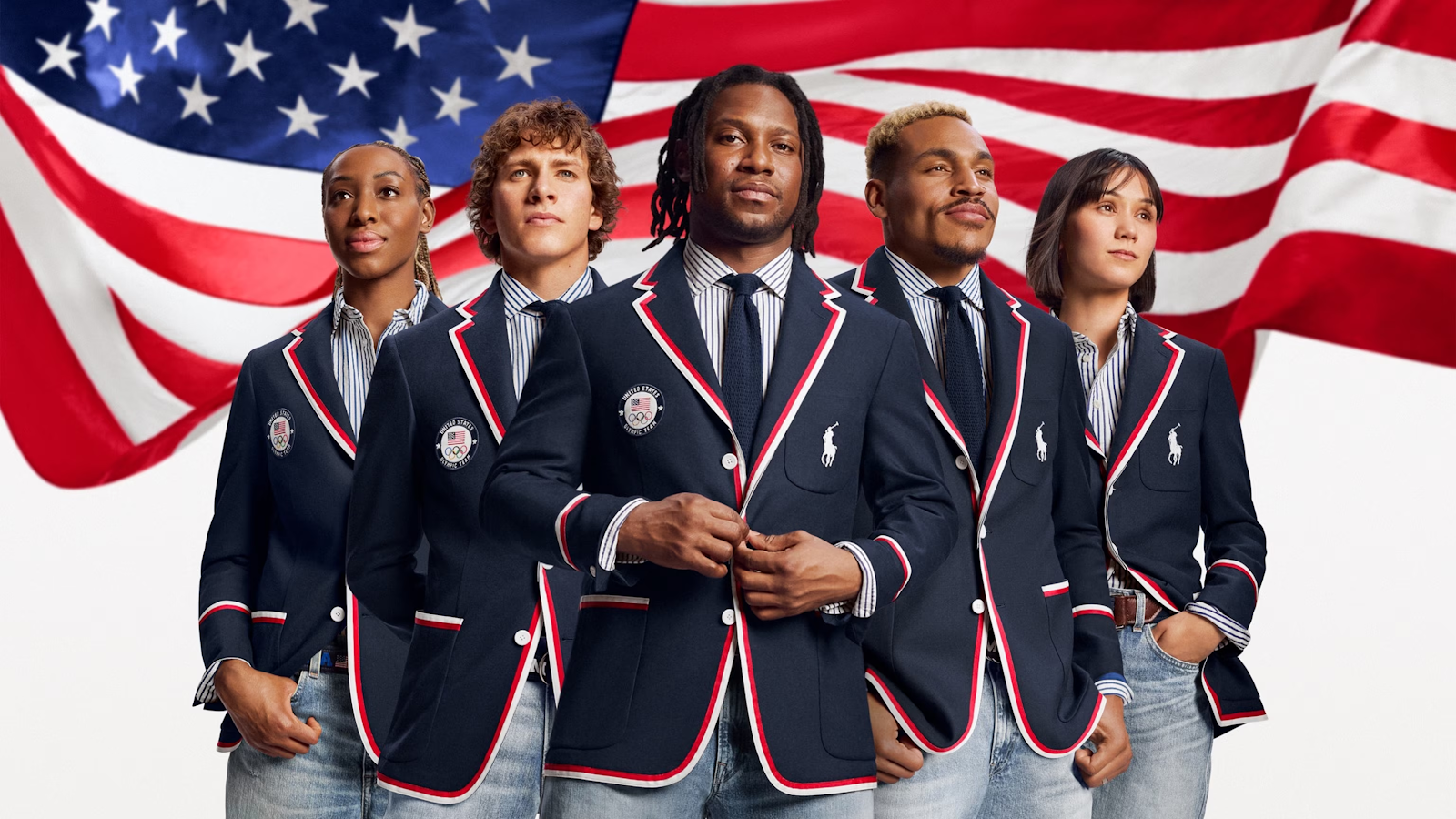
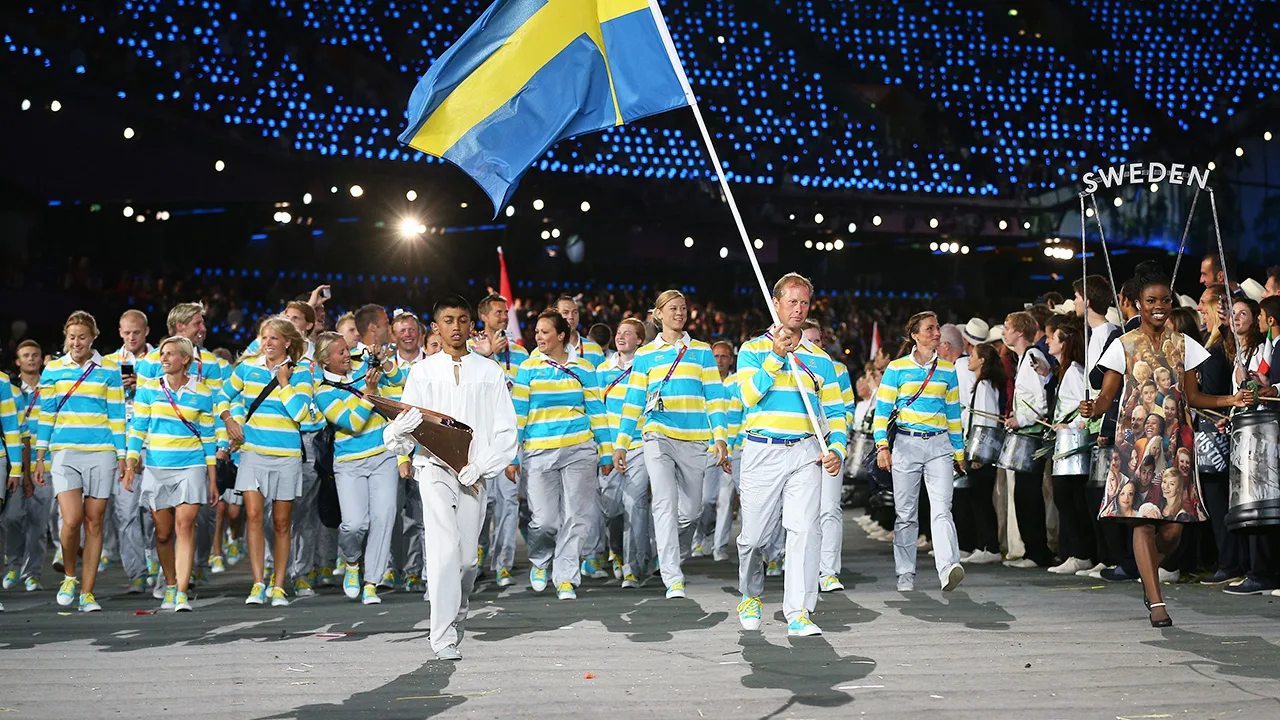
The outfits worn by each country as they make their grand entrance during the opening ceremony are an opportunity to show off both team and national pride. The US team is often obnoxiously 'Murrican in cowboy looks (such as Lake Placid in 1980 and Sarajevo in 1984) and more red, white, and blue than the flag itself (such as Sochi 2014, Vancouver in 2010, and Rio in 2016). For some reason, the Americans also favor every type of hat under the sun: straw (Rome 1960), knit beanies (Innsbruck 1976, Vancouver 2010, Beijing 2022), cowboy hats (Nagano 1998, in addition to Lake Placid and Sarajevo), fedoras (Albertville 1992), tams and berets (Salt Lake 2002, London 2012), even scally caps (Athens 2004, Turin 2006, Beijing 2008).
To be fair, many other nations also exhibit national pride in their heritage with details of cultural significance from traditional dress. Some countries opt for almost complete traditional looks, or at least outfits based very closely on traditional dress (Kenya in Tokyo 2021, India in London 2012, Cameroon in London 2012). Many tropical and island nations favor vivid colors, such as Barbados (Paris 2024), Vanuatu (Tokyo 2021), and Mexico (London 2012).
Of course, there are always a few duds that make you wonder what the designer was thinking: Australia's Sydney 2000 mishmash of a yellow check blouse, dark red zippered jacket, and loden skirt topped with a cross-body bag with a wide strap that looked like a shiny gray seatbelt; Canada's Barcelona 1992 ensemble that paired a yellow t-shirt with full shorts and matching overshirt in an obnoxiously busy multi-colored print (although the accompanying white straw hat was fantastic); and the Hungarian women's Beijing 2008 dresses and hats, which were supposed to be a red-on-white floral print but tended to look more like splotches of blood.
3) The Commentators

As a non-sports-fan, I rely on the commentators to explain to me in layman's terms how the various sports are scored, what the rules are, what I'm seeing at the moment, etc. An enthusiastic commentator who is able to explain what's happening even while losing their mind over something unusual or exciting that's going on is worth their weight in gold. Case in point: Rupert Cox, the Australian commentator for the rugby match in Paris 2024, had me on the edge of my seat despite not even knowing which two teams were playing or whether the teams were striving for a "goal," "basket," "wicket," or "googly." (Spoiler: It's a "try.") Because it was "SUDDEN DITH!!" (A charming accent is always a plus. As is a fabulous name like "Rowdy Gaines" or "Elfie Schlagel".)
Rugby, epee and sabre, canoeing and kayaking, water polo, handball, judo, equestrian - all events I wouldn't generally choose to watch, but which I will both watch and enjoy, given the right commentator.
4) The Underdogs

In my mind, there are two types of underdogs: the ones who come in as underdogs, knowing that they're probably not in contention for a medal, but striving to reach their personal best; and the athletes who might or might not be on the cusp of medal contention who step in at the last minute for an injured or ill teammate, or who just step up to the plate, and absolutely kill it.
Paris 2024 has a prime example of the latter in Steven "the Nerd" Nedoroscik, aka "Pommel Horse Guy", aka "Clark Kent", the bespectacled (I think I'm legally required to include that as part of his title) US gymnast who specializes in - surprise! - the pommel horse.

Nedoroscik was the last among his teammates to perform during the men's team competition. And boy, did he ever kill it, scoring high enough to bring the team a bronze medal, the first men's gymnastics team Olympic medal since 2008. The fact that he is charming, adorable, and absolutely embraces his own nerdiness is simply the icing on the underdog cake.
5) The Underqualified Competitors

I suppose you could consider this a subclass of the underdog: an under-under-underdog, if you will. Every now and then, we see a competitor who, frankly, doesn't belong at the Olympics. They're outclassed, out-trained, out-funded, and often out-talented by the other competitors. But they have heart and drive and determination that is exhilarating to watch - in addition to being a good comparison for how unbelievably phenomenal the other competitors are.
Some of the most well-known of these have been Michael David Edwards, aka "Eddie the Eagle", a ski jumper from England who competed in Calgary in 1988; and the Jamaican bobsled team at the same games, whose story was later made into the movie Cool Runnings. Lesser-known entrants in this category include Eric Moussambani, aka "Eric the Eel", a swimmer from Equatorial Guinea who swam the slowest 100-meter swim in Olympic history in Sydney in 2000; or Liz Swaney, an American halfpipe competitor who competed for Hungary in PyeongChang in 2018, who basically did a run down the hill without attempting any "tricks" other than gentle 180s at the sides of the pipe.
6) The Random Memorable Moments

A huge event like the Olympics is bound to have some unexpected, interesting, funny, or poignant moments. The most memorable of those unexpected moments in Paris - thus far - has to be the appearance of "Bob the Swim Cap Diver Guy."
In case you missed it, prior to a swimming race, officials noticed an object at the bottom of the pool, which turned out to be a swim cap that had fallen in and sunk. They needed to clear it before the next race could begin, so enter Bob, one of the lifeguards on duty at the venue. He marched out with his dad bod and vivid floral Speedo on display, dived in, and retrieved the cap so the Games could continue. He chose to remain anonymous, but he's one of my favorite stars of this Olympics.
Past Memorable Moments include Kerri Strug vaulting on a nearly-broken ankle in Atlanta in 1996, the London 2012 US swim team's lip dub of "Call Me Maybe", Greg Louganis hitting his head on the diving board during the 3m springboard in Seoul in 1988 (and coming back to win that gold medal anyway, plus another gold in the 10m platform), and in Los Angeles in 1984 when Swiss marathoner Gabriela Anderson-Schiess missed a water station and began to stagger from dehdration in the heat near the finish line, but waved off assistance from medical personnel so she could finish the race without being disqualified, literally collapsing as the crossed the line. All unexpected and truly memorable moments, for good or ill.
7) The Awesome Human Interest Stories

Human interest is at the heart of the Olympics. Yes, these are all amazing athletes who have worked unbelievably hard for years to get where they've gotten. But there are always a few who have had a little more difficult path to their Olympic games, whether it's injuries, finances, family issues, or whatever. I love hearing the stories that make the athletes feel just a little more real, a little more like one of us.
Stories from past Olympics that stand out in my mind include Rulon Gardner, an American wrestler who struggled with both a learning disability and physical recovery from a snowmobile accident and who defeated the long-undefeated, 3-time gold medalist, Soviet great Aleksandr Karelin; Wilma Rudolph, who overcame polio at age 12 and won three Olympic gold medals for running in Rome in 1960, only 8 years later. In Rio 2016, after the British government cut funding for the country's BMX racing team, Bethany Shriever got herself to the Olympics using crowdfunding and getting a part-time job while training full time, winning a gold medal. Perhaps my favorite human interest story from the Olympics is from Tokyo in 2020, when two high-jumpers, Mutaz Essa Barshim of Qatar and Gianmarco Tamberi of Italy, tied for gold and were offered a "jump off" to determine the winner. But instead, the two agreed to share the gold medal.
8) The Unexpected Wins - and Losses
Going into the Olympics, there are always certain athletes who it is assumed will come home with a medal, as well as a world or at least Olympic record. Some of those will fulfill those assumptions; others will unexpectedly crash and burn. And occasionally, a dark horse athlete will suddenly burst out of the crowd and land on the medal stand.

As an American, my first thought for this category is, of course, the famous "Miracle on Ice" in Lake Placid in 1980 when the US hockey team, composed of talented amateurs, took on the professional Soviet team, which had won four gold medals, and WON. "Do you believe in miracles?", indeed.
But there are plenty of other stories like that one. In Tokyo in 2020, a Tunisian swimmer named Ahmed Hafnaoui barely qualified for the 400m freestyle, but when the time for the "real" race came, Hafnaoui outswam the rest of the field for the gold medal. In PyeongChang in 2018, Czech skier Ester Ledecka borrowed a pair of skis and took the gold medal in the Alpine Super-G away from favored contender Anna Veith. A ways further back, in Tokyo in 1964, an unknown American runner named Billy Mills dogged the frontrunners throughout the 10,000m race, then put on an incredible burst of speed at the end to claim the gold medal.
And then there are the favored athletes who just don't quite make the grade when it comes to the big dance. The example that jumps to my mind is one where one of the most lauded athletes didn't even make it to the Games: In 1992, decathletes Dan O'Brien and Dave Johnson starred together in a series of Reebok commercials leading up to the Olympics. But world champion O'Brien failed to make the Olympic team, and then Johnson developed a stress fracture in his foot, still competing in Barcelona, but settling for bronze instead the anticipated gold. In Beijing in 2008, Lolo Jones was favored to win the 100m hurdles, but fell back to seventh place after hitting the second-to-last hurdle. The gold medalist was her teammate Dawn Harper, who had barely qualified for the team.
9) The Glamour Shots of the Venues
Many of the venues are built specifically for the Olympic Games, and many are built to be beautiful as well as functional.

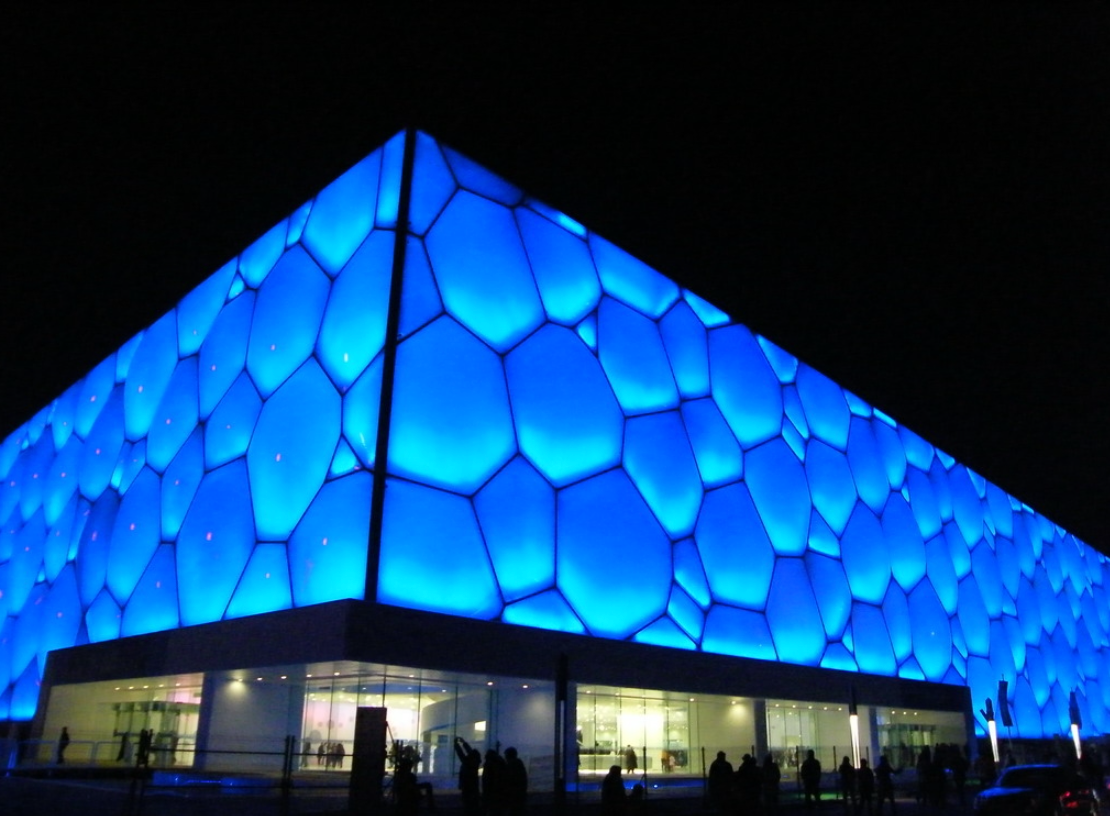
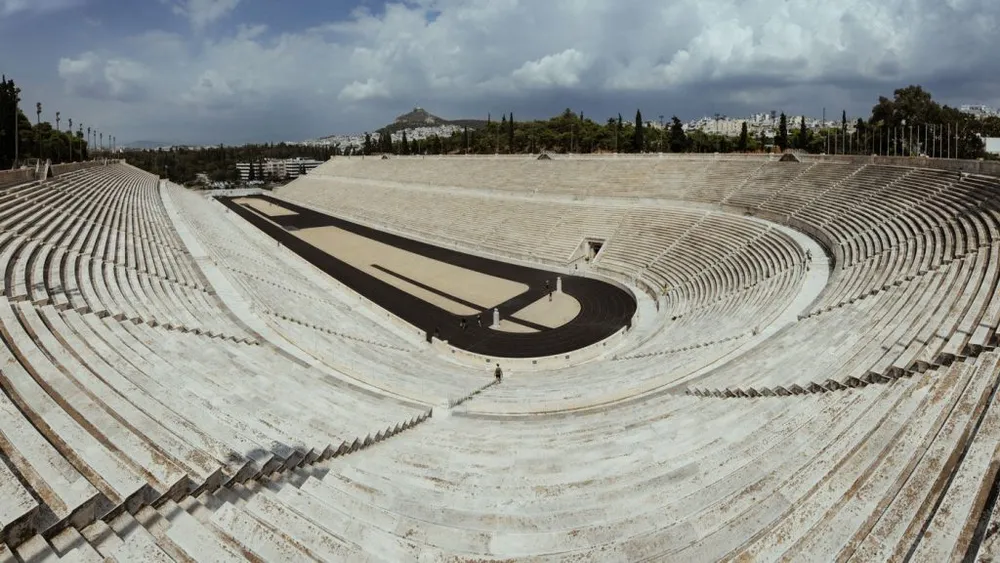
modern Olympics in 1896 and again in 2004


10) The Closing Ceremony
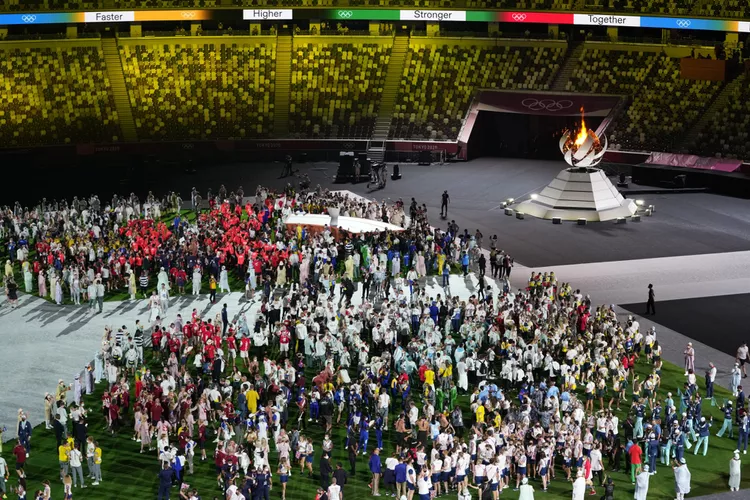
Not much of note happens during the closing ceremonies; there is usually a "sneak peek" at the next country to host, and someone from the IOC says a few words, blah blah blah. But what I love is the flood of athletes from all the nations entering together, no divisions by country or even sport, just a bunch of athletes who have just experienced one of the most exhilarating moments of their lives, celebrating their own and each others' achievements. That, to me, is the truest spirit of the Games.